
Strategies to develop a healthy self-care routine for children
People are struggling.
It has been almost a year since the United States shut down due to the pandemic. Work from home and school from home became the new normal. Weeks progressed from Monday to Tuesday to Wednesday to Blursday. Work-life and school-life balance broke into unrecognizable pieces. Even the most seemingly “put-together” adults have struggled at times with the new “normal.”
If those confident and well-adjusted adults have combated some demons, then how are kids doing?
Children, as a whole, tend to be resilient. But their lives have been turned upside down and the major milestones that mark the progression of youth – birthdays, graduations, and family celebrations – have been nuked by the COVID-19 pandemic. According to the CDC, 7.1% (4.4 million) of children aged 3-17 suffer from anxiety and 3.2% (1.9 million) battle depression. These statistics are from before the pandemic! Clearly these numbers have sharply increased over the past 12 months. While one need not be Sherlock Holmes to determine why the numbers are growing, a complex array of factors such as the uncertainty to when this all ends, extended social isolation, and parental angst about jobs and providing for their families certainly contribute.
Defining Self-Care
The word “vaccine” has entered our daily conversations. Self-care gurus have described the practice of self-care as a vaccination for your soul. The WHO (World Health Organization) defines it this way: “the ability of individuals, families and communities to promote health, prevent disease, maintain health, and to cope with illness and disability with or without the support of a healthcare provider.” For children, they need our help to establish a healthy self-care routine. An article in Parents states that setting up proper self-care routines can prevent future anxiety and depression in children.
Self-Care Strategies
Create a routine
Routines provide security and predictability. Help your child establish a consistent wake up and bedtime. If your child is learning from home, it is critical to set up a school day schedule. Have your child follow a typical school day schedule with built-in lunch and brain breaks. After school include time to complete chores and provide a “slow down” time when computers and phones are off. For more tips on remote learning, check out this article.
Exercise
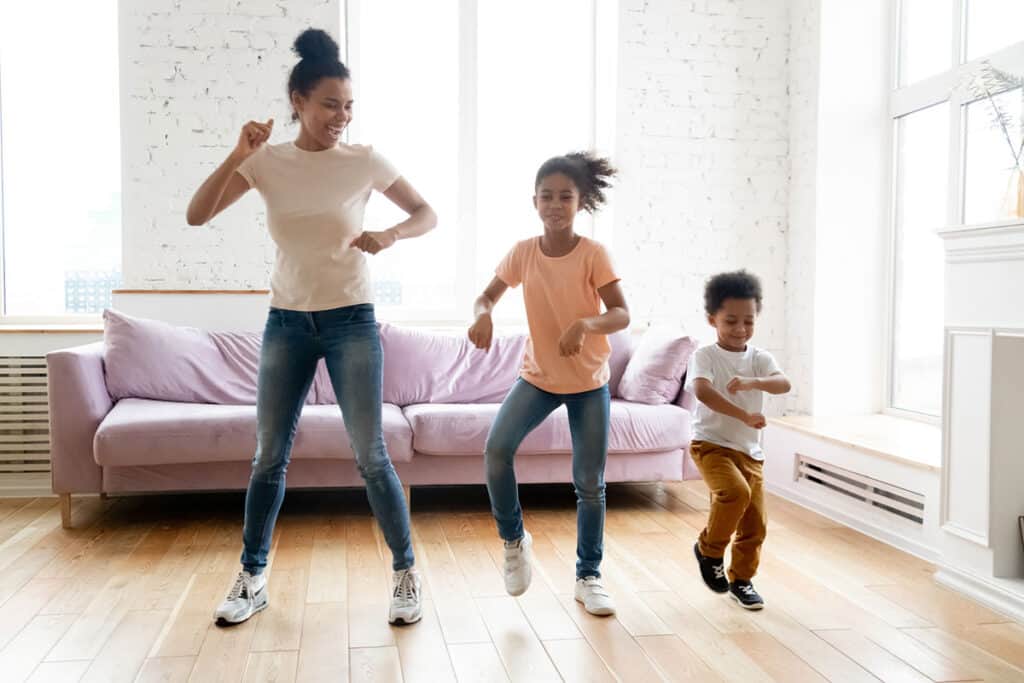
Exercise has so many benefits. The simple act of going outside can reduce depression. One need not run or bike or engage in high intensity activities to reap the benefits of exercise, though those endeavors can get your endorphins popping, which are the “feel good” brain waves. The CDC suggests 60 minutes of moderate to vigorous exercise per day for children. Even going for a 20-minute walk can change your whole attitude.
Frederick Law Olmsted, the famous landscape architect who designed Central Park in New York City, said, “The enjoyment of scenery employs the mind without fatigue and yet exercises it; tranquilizes it and yet enlivens it; and thus, through the influence of the mind over the body gives the effect of refreshing rest and reinvigoration to the whole system.” In other words, get the kids outside!
Express Yourself
Encouraging children to appropriately express themselves through writing, art, or music has many therapeutic benefits. According to the National Alliance on Mental Illness, listening to music engages the neocortex part of the brain, which reduces stress and lowers impulsivity. So jam out! Additionally, keeping a journal or encouraging drawing can help children process their feelings. Teach children emotion-related words so they can put a name to their feelings. Find out what expression method works for your child.
Yoga Practice and Meditation
Quieting the mind can be challenging during a pandemic. The sensationalized news and ever-present social media certainly can add rocket fuel to our uncertain and airport-busy minds. What is the antidote? Establishing a yoga routine that includes meditation can do wonders to settle the frazzled mind. In fact it builds physical, emotional, and mental strength. According to the Selmar Institute of Education, children with ADHD who learned meditation and practiced regularly had better concentration and experienced a decrease in hyperactive outbursts. Yoga and meditation promote mindfulness, which is the practice of focusing on the present moment. Chopra offers three mediations geared for children, and this You Tube video can get you started with some yoga poses.
Focus on Sleep
Sleep is a critical ingredient in self-care. According to Health Psych, sleep is crucial for learning, performance, and mental health. And it starts with a consistent and early bedtime. The same Health Psych article states that the hours of sleep before midnight lends them to deeper non-REM sleep, which provides your child with higher levels of concentration the next day. Even teenagers need a sold 9 hours of sleep. Prioritize sleep!
Conclusion
Self-care is more important than ever during a pandemic. Helping your child establish healthy and appropriate self-care strategies will set them up for success in their adult lives. Create a consistent routine, encourage exercise and outdoor activity, channel your child’s emotions in artistic expression, slow down and adopt a yoga and meditation practice, and prioritize sleep. With so much darkness and uncertainty swirling around, adopting self-care strategies will allow you and your child to safely arrive in the light once the pandemic ends.
At Engage the Brain we encourage our students and families to practice good life skills. Self-care leads to healthy bodies and brains.