

Why are some children extremely sensitive? And what can parents do to help their sensitive child navigate the seemingly scary world around them?
October ushers in all kinds of scary and spooky sights and sounds. Horror movies flood all the television subscription platforms. Suburban neighborhood homes transform into graveyards with other eerie phenomena, like witches cackling or creaky doors opening. Festive yet frightening.
Another scary situation? When sensitive children hear critical comments targeting them for some reason. Warranted or not.
Some children, especially neurodivergent ones, can be emotionally hurt by critical comments. Labels and derogatory words have a long shelf life in many kids!
This writer has heard: “You are a (gosh darned) dummy” too many times as a child to remember. The volume of the voice in my head has lowered, but it still echoes in my thoughts. This has lasted decades!
These attacks – this is what it feels like to sensitive kids – lead to some lingering negative effects that can quickly morph and cement into shame.
Shame sticks with people. It turns into armor, like a turtle shell, where the person retreats and essentially hides and waits for safety. It can also turn into a weapon. Shame can create aggression and anger towards a particular – and often innocent – target. Shame has no rules of engagement and does not stay within the lines.
Many ADHD and autistic children share this under-recognized trait of feeling deeply, being overly sensitive, and taking even simple redirection as a personal attack. What is the answer? Simple in theory but challenging in reality.
Watch your words and read on!
Traits of highly sensitive children
If you are a parent of a neurodivergent child and are reading this, you may be saying to yourself, “My goodness, this explains so much.” Clearly every child is unique. However, kids who are highly sensitive to the world around them share six traits, according to Neurodivergent Insights.
Emotional sensitivity: extreme emotional response to various stimuli
Deeply empathetic: heightened understanding of other’s feelings
Subtle awareness: sharp perception on surrounding details
Sensitivity to environment: strong reactions to their surroundings
Sensory overwhelm: becomes easily overloaded due to sensory input
Affect contagion: strongly influenced by the emotions around them
While the overwhelming majority of these children are neurodivergent – autism, ADHD, etc. – neurotypical kids can exhibit these same traits. And as a discerning eye can see, there is overlap between these six traits. The bottom line: highly sensitive children are deeply affected by the world around them.
Why critical comments deeply hurt some people
It is a great question: Why do some kids become more deeply hurt by critical comments than some of their peers? Environment? Genetics? Here are some possible reasons.
Rejection sensitive dysphoria (RSD) is an extreme emotional or physical pain caused by a real or perceived rejection, criticism, or failure, according to the Autistic Girls Network. It can produce feelings of pain, shame, and or anxiety. RSD is experienced by people with autism, but also can extend to other populations such as individuals with ADHD.
Traits shared by people with RSD include people pleasing, reassurance seeking, perfectionism, and or a fear of disappointing others. Parents, do any of these sound familiar? If so, watch your words.
Some children have Sensory Processing Sensitivity, which affects about 15% to 20% of the population, according to Science Direct. These children experience deep processing, meaning they perceive facial cues and tone of voice much more deeply than the average child. Plus these same kids can experience emotion reactivity, which means they experience emotions – both positive and negative – much more intensely. A critical comment can feel like a physical punch.
Yet another reason some kids are wounded by words is due to a history of correction. Neurodivergent kids tend to receive way more behavior corrections than praise compared to their neurotypical peers, and this imbalance of negative comments to positive ones can simply open wounds and scabs developed from the onslaught of perceived criticism.
Finally, there may be an underlying (undiagnosed) mental health condition, such as depression and/or anxiety. Children who are suffering from a mental health condition more than likely have a negative self-image, and any comments, no matter how innocuous, can feel like an attack.
How to help your sensitive child cope
Just as there are many reasons why a child is highly sensitive, there are many ways to help support them.
Acknowledge their feelings: Help your child name the emotion they are feeling, and equally as important, do so without judgment. I see you are feeling angry. This lets your child know they are being heard and understood.
Develop a calm and structured routine at home: While a highly sensitive child can meltdown anywhere at any time, a common time and place is at home, right after school. By establishing a consistent routine that your child can depend on, you are providing a safe space for your child to return to each day. Their sense of security increases while their anxiety deceases.
Teach emotional regulation: Directly teach your child different techniques that help them calm down. Breathing exercises, simple yoga poses or time lying quietly on a mat, or placing a weighted blanket on themselves are all great self-regulation strategies. Bring the nervous system back to baseline.
Teach self-advocacy skills: Because highly sensitive kids tend to be people pleasers, it is important that you help your child learn how to self-advocate.Essentially, you are teaching your child how to communicate their needs and boundaries in an effective way. A great low-pressure way to develop this is through role playing at home. Pretend to be your child’s teacher and have them ask you for something. Rehearsal will boost confidence and independence.
Develop self-awareness: Help your child learn their triggers. Is it crowded locations? Extremely loud situations? Comments from an authority figure, that are truly meant to help, but seemingly come across as personal attacks? Work with your child to develop an awareness of what sets them off, and then make a plan to help diffuse these situations.
Connection before correction: Without hesitation, even as your child may be exhibiting a torrent of emotions, tell them you love them before you try to intervene. Simple phrases like I am here with you; or You are an amazing person can go a long way to establishing connection before you begin to try troubleshoot or course correct.
Build them up (not toughen them up): Perhaps a well-meaning relative has uttered the phrase, “You need to toughen him up” about your sensitive child. Unfortunately, this does not work. Rather, feed child your child positive reinforcement when they produce a good outcome. Recognize and acknowledge that they went to their room and listened to music rather scream at an annoying sibling. The goal is to build confidence and agency so that they will rely on positive coping techniques rather than devolving into risky behavior or less desirable alternatives.
Final thoughts
During the month of October, scary and spooky events and decorations tend to permeate the landscape. Which makes it a perfect time to help parents – and any adult who works with children – remember that scary and intimidating words can damage sensitive children. These kids tend to tune into the environment around them with eagle eyes, elephant’s ears, and CIA agent’s empathetic accuracy. By acknowledging their feelings, teaching emotional regulation and self-advocacy skills, and most importantly, connecting with your child before correction, you will help them navigate this big, beautiful, and sometimes scary world. The goal is to build agency and confidence, not a perception of defectiveness, leaving the child feeling like something is wrong with them.
If you have an overly sensitive child that becomes easily upset by criticism and or perceived negative comments, contact Jennifer Disch at Engage the Brain to discover how an Executive Functions coach could help teach your child these critical skills.

What exactly is self regulation? Why is it so important that children learn this skill? And 5 strategies to help build self-regulation.
One of the best lessons you can learn in life is to master how to remain calm. Calm is a super power. Bruce Lee
Perhaps it is not the sexiest Executive Function (EF) skill, but self-regulation allows all the other more popular EF skills – time management, planning, procrastination, focus, etc. – to function properly.
Self-regulation is defined by the Child Mind Institute as “the ability to manage your emotions and behavior in accordance with the demands of the situation. It includes being able to resist highly emotional reactions to upsetting stimuli, to calm yourself down when you get upset, to adjust to a change in expectations, and to handle frustration without an outburst.”
Clearly children are not expected to be able to do this every single day, at all times (heck, there are many adults that continue to struggle with this critical skill). It truly is a process of developing the skill over time so that your child becomes better and better at self-regulation as they mature through childhood into adolescence and then adulthood.
What is the opposite of regulation? Dysregulated behavior can look differently in different kids: tears, angrily throwing items, a string of inappropriate words (ones that rhyme with hit, truck and bell, just to name a few of the more popular ones), withdraw, and or defiance. Put another way, some kids have a short fuse that immediately detonates when they are presented with an emotional situation. Other kids, seemingly, have a longer fuse and maybe allow multiple negative events to pile up before the proverbial meltdown occurs.
Why children become dysregulated obviously varies from kid to kid, but there are some common causes. And just as importantly, what can parents do to both deter the dysregulation and critically, to build strategies the child can implement when the proverbial fuse does blow?
Common reasons kids become dysregulated
Children of all ages can become upset. But when the emotions overflow to a point where the child loses control of their behavior, they have become dysregulated. Neurodivergent kids tend to struggle even more with this compared to their neurotypical peers.
Here are some common triggers:
Sleep deprivation: CDC reports school age children ought to get 9 to 12 hours of sleep per night. Reality is most are getting less than 7, even fewer on school nights. A tired child simply has less frustration tolerance.
Hunger: When blood sugar levels dip, so can regulation. Ensure your child is eating healthy food at the appropriate times of day. Excessive sugar and caffeine makes stress worse!
Sensory input: Some kids become overwhelmed when noise levels increase or bright lights flash and or are too intense.
Crowded locations: Too many rats in the cage is a common description for a child who feels threatened in large crowds.
Routine change: Sometimes one little change in a typical afternoon routine can set a child off. These unforeseen transitions, such as taking a sibling to the doctor rather than going straight home after school, can create turbulence for some kids.
Excessive screen time: According to the National Institutes of Health, the average child between 8 and 18 years old spends over 7 hours a day in front of screens. This includes for school, video games, television, and all electronics usage. In a perfect world, this number would be around two hours per day.
Undiagnosed mental health condition: If your child seems to “lose it” often, perhaps there is a mental health condition such as depression or anxiety. Consult with your pediatrician if you suspect there may be something more going on.
Clearly these are just a few of the more common reasons a child could become dysregulated, but you know your child best, and determining why this keeps happening is critical before you can begin to address it.
How to help your child with dysregulation
Helping your child manage their regulation begins with a basic anatomy lesson and how their nervous systems operate.
Perhaps the first thing to remember is that our nervous systems run like a car engine. Most of the time it just idles, like having your car’s engine turned on but have it in “Park.” As we experience different situations our nervous system reacts, just like placing the car in “Drive” and pushing down on the accelerator. This activates the sympathetic nervous system, which alerts our flight or flight response. Some “engines” rev high while other’s “engines” just creep slightly higher. Kids with ADHD or ASD can experience big mood swings and feel big emotions, like flooring the gas pedal.
Continuing with the car engine analogy, the brake pedal in the car is the parasympathetic nervous system, which helps us calm down, lowers our heart rate and recover from stress. It is the parasympathetic system your child must learn to target when they become dysregulated.
Like any other skill they have learned, such as how to shoot a basketball or solve a math equation, your child needs to practice how to manage their emotions. This not bad behavior! It is a yet-learned skill!
How?
Co-regulate: You, the parent, must remain calm in order for your child to have a chance to regulate. Even if your child is in the middle of a massive meltdown, you must exhibit control and exude calmness. (Yes, way easier said than done!) This can include more than just words. Non-verbal clues like slow breathing and a relaxed posture can signal all is safe.
Create a calm down space: In your home, create a safe space where your child can go to settle down. Items in the space may include comfy pillows, a weighted blanket, fidget tools, and or a favorite toy. Emphasis should be placed on safe rather than punishment. The goal is for your child to calm down.
Predict challenging situations and plan ahead: Above are listed some common triggers for dysregulation. Perhaps completing math homework problems is a trigger for your child. Offer to sit with them while they complete the first problem to get them going, and then inform the child to complete the rest alone. If frustration bubbles to surface, encourage your child to take a short break then come back to the task.
Scaffold the skills: In other words, practice one step at a time. For example, if your child tends to meltdown when asked to stop playing video games, practice starting and stopping a game. Sit with your child and tell them they may play a game for five minutes, and then we will turn it off. Repeat several times over several days. As they improve, increase the time allowed to play the game.
Tend to the nervous system: Everyone’s fight-flight-freeze system operates at different levels of awareness. One of the best things your child can learn is to how keep their nervous system running at a reasonable rate. How? Journaling can be a powerful way for kids to work through emotions. Meditation or guided meditations can offer some relaxing thoughts to restore the nervous system back to baseline. And of course breathing techniques are simple and effective tools, too. And do not forget the power of yoga and some simple stretching exercises on a mat.
Final thoughts
One of the best predictors of future success is the ability to learn and implement the Executive Functions skills. At the heart of these brain-based skills is the ability to self-regulate. Without this, none of the other, more well-known skills can function, so it serves to reason we need to help our children develop it over time. How? Understand their triggers. What seems to repeatedly set them off? Then form a plan to address the weakness, which starts with co-regulation, your ability to remain calm in the heat of the moment! Practice the techniques when calm, not in the middle of a meltdown. And teach your child to tend to their nervous system on a daily basis.
Some thought leaders in the education field are stating there is a new rendition of the Three R’s. What used to be reading, writing, and arithmetic, is being replaced with regulation, relationships, and resilience. You would be doing your child a massive favor by focusing on and developing these important life skills.
If your child continues to struggle with self-regulation, or any other EF skill, contact Jennifer Disch at Engage the Brain to discover how an Executive Functions coach could teach these critical life skills to your child.

What are the most common reasons kids hate school? And how do you help them make school a more positive experience?
With the calendar flipping to August, in Florida that means a new school year is upon us. For some students, a new school year spells excitement and anticipation, along with back-to-school-shopping, a fresh haircut, and new sneakers.
For other kids, the words back-to-school conjure something else: dread, anxiety, disgust, and what they view as a steady supply of endless assignments. These children hate school. Many of these kids have built up scar tissue, even elementary aged ones, from a variety of traumas: academic failures, social insecurity, and a perceived curriculum disconnected from the real world, just to name a few.
If your child is dreading the new school year, there are some tangible steps parents can take to help their child better prepare, learn to tolerate, and even thrive in school.
Read on to learn how!
Pinpoint the reason your child hates school
“I hate school” typically is the tip of the iceberg, and parents must look beneath the surface to learn what is causing this dilemma. It is critically important that you tell the child you love them and that you will figure this out together. This is not something for the child to “just get over” or to “deal with.” Validating their feelings and building a team approach to this will allow your child to be a willing participant in this discovering and rectifying process.4
As the Child Mind Institute states, it is rarely an act of defiance. Undoubtedly there is a deeper reason for the contempt. Children often lack the vocabulary or proper language to share their emotions, so validate their feelings and try to discover the root cause. Help label their feelings. It sounds like you are anxious or I sense you are feeling misunderstood. Work with your child to define the exact reason or reasons for the dislike of school.
Six common reasons children loath school
Academic or learning challenge – in one specific subject or perhaps they are not challenged enough. Curriculum and lessons can seem like they are moving way too fast to learn. The lessons feel like a series of sprinting cheetahs and are simply too quick to catch. Or, for other students, the instruction and content may move way too slowly, like a tortoise with four bad knees that will never make it across the road. Either option is frustrating!
Social or bullying – some kids have a hard time making friends and simply feel disconnected and lonely during the school day. Or, perhaps there is bullying behavior occurring and your child feels frightened and/or threatened.
Anxiety – can have different root causes. Some kids still feel nervous when they separate from their parents. Sometimes sensory overload can occur. Classrooms, hallways, cafeterias, playgrounds, and other areas on the school campus can feel overwhelming to some children.
Sitting for (what seems like) hours at a time – can be challenging for some students, especially those with ADHD. Some kids literally feel like a caged animal, having to sit still for hours at a time. And it seems like recess and PE, critically important to many students, are being reduced and or removed in schools.
Perceived disconnect from “real life” – do not see how the subjects taught will ever benefit them in the future. Typically this manifests with older students – middle and high school aged. You will probably hear the refrain, When will I ever use this? in a very dramatic tone.
Some students receive “heavy workloads” – which could include finishing a class assignment at home and/or assigned homework. When excessive school work bleeds into the home, the normally “safe” environment now becomes just an extension of school and feels like a never ending loop of frustration.
How to help your child enjoy school
Now that we have pinpointed some of the most common reasons kids hate school, let’s take them one at a time on how to remedy the situation(s):
Academic or learning challenge – If your child acknowledges he struggles in a particular subject, consult with his teacher to gain more clarity. Perhaps the teacher can offer some resources for extra practice. If the teacher declares your child is “far behind” or “simply not grasping the concepts,” perhaps consulting with a tutor or Learning Specialist, who is an expert at instructing in the subject your child is currently struggling in, could offer your child another opportunity or method to learn the material. Of course pursuing academic testing – either at school or with a private educational psychologist – could offer some answers too.
Conversely, if your child is bored and truly understands all the material, ask the teacher for enrichment opportunities. Often times these activities and resources can feel like just extra work, so encourage your child to be part of the discussion (and practice their self-advocacy skills) and to plan out a unit of learning they would truly be excited about.
Social issues and/or bullying – First, and most importantly, tell your child that the bullying is not their fault. Next, try to get as many details as possible. Who exactly is bullying? Where does this happen? In the classroom? Cafeteria? Playground? Once you get a clear picture, contact your child’s teacher and share what you have learned. Continue to document each and every incident. Finally, learn your child’s school’s anti-bullying policy, as this can help inform your next steps.
To help your child deal with the bully, have them role play at home, practicing telling the bully to stop using a firm tone. Encouraging your child to ignore the bully can be effective too, as the bully may be looking for a reaction, and when not receiving one may move on to someone else. Yet another strategy is to encourage your child to be part of a group of friends, especially on the playground. There truly is power in numbers! Bullies are less likely to engage when groups are present. Finally, establish an adult ally at school your child can turn to. If not the classroom teacher, perhaps it could be the PE teacher, guidance counselor or librarian.
Anxiety or separation issues – Children all the way up to high school age can experience separation anxiety, especially neurodivergent children. Depending on the level of anxiety, a good first step is to teach breathing techniques, which are proven to reduce anxiety. A simple one is called the Box Breath, where you breathe in for four seconds, hold it for four seconds, breathe out for four seconds, then hold for four seconds. Repeat several times. Another simple strategy is to allow your child to bring a small comfort object from home – such as a small stuffed animal or a small smooth “worry stone” – and keep it with them during the day. Yet another good strategy is to create a schedule for the day on an index card so your child knows exactly what each step of the day will look like. Finally, share this information with your child’s teacher(s) so they can be aware and offer help as needed.
Sitting for extended periods of time – A good place to start is the seat itself. There are flexible seating options such as a standing desk, an exercise ball, and a cushion that sits on a typical chair. Another good strategy for active kids is a fidget tool. These can be small squeezable balls or some other small tool. Perhaps most importantly is ensuring your child has movement breaks. Even if they are just allowed to walk the back of the classroom for a minute or two. Finally, make sure your child is getting enough exercise outside of school.
Perceived disconnect from real life – Connect their current classes with a real world example. Does your child like money? Plotting an equation on the coordinate graph in algebra class could be a model of a stock’s performance over time. Or, if they are reading a novel in English, point out how studying characters’ motivations will help them develop an awareness of multiple views of a situation. Many real word situations are not black and white; they tend to be more nuanced, and reading fiction can help develop that critical life skill. While intrinsic motivation is typically best, sometimes a child needs external motivation. Develop a contract with your child that rewards them for performance. Perhaps there is something they are willing to work for?
Heavy school workloads – Depending on what type of school your child attends, some classes can pile on the work: class assignments, discussion posts, homework, essays, and test preparation. Start with a structured after school routine. It should include a short break, a snack, movement, and homework time. Repeat short breaks as needed. If your child never seems to finish the assignments, contact the classroom teacher and ask for clarification about how long an assignment ought to take. Sometimes misery loves company, so simply offering to sit with your child – known as body doubling – while they complete the assignment can be effective. Finally, introduce a timer as a game. Have your child estimate how long an assignment should take, then set the timer for that amount and challenge your child to finish the assignment before the timer goes off.
Final thoughts
With the next school year upon us, not all children are thrilled to return to the classroom. In fact, many downright dislike school! If you are the parent of one of these kids, first determine the reason or reasons for the aversion. Then attack the issue with strategies that are proven to work.
Remember: There are many school choices now, not just the traditional brick and mortar, 5 days a week, 7 hours a day school. Virtual schools – both offering synchronous and asynchronous options, hybrid schools like North Park Learning Group that offer flexible scheduling, and private schools are all excellent alternative options. Scholarships exist to fund those education options, too.
If your child dislikes school and you are not sure how to help, please contact Jennifer Disch at Engage the Brain to set up a discovery phone call to learn about educational options and strategies available for your child.

What exactly is background knowledge as it relates to reading? And how do you develop it so children become proficient readers and can comprehend complex texts?
“The more that you read, the more things you will know. The more that you learn, the more places you’ll go.” Dr. Seuss, I Can Read with My Eyes Shut.
Nobody will confuse Dr. Seuss and complex texts. But perhaps more than any other author, he has launched more children’s love of reading by incorporating silly rhymes, unforgettable characters, and surreal illustrations. But tucked away in its seeming simplicity is often a brilliant message, such as the importance of saying you’re sorry or the encouragement to read, which will lead to unknown and fantastic places.
And if you follow education and the teaching of reading, the phrase The Science of Reading has entered into the modern educational lexicon. In essence, it is a new and science-backed way to teach children to read. Gone are Dick and Jane. The “whole language” trend of the 1980s and early 1990s has been unceremoniously kicked out. In its place arrives what may be a blend of best practices from over the years.
Landmark School shares Dr. Hollis Scarborough’s literacy framework diagram of the reading rope, which explains how skilled reading develops. It describes how reading is made up of two connected categories: Language comprehension and Word Recognition. Background knowledge is the first thread under language comprehension.
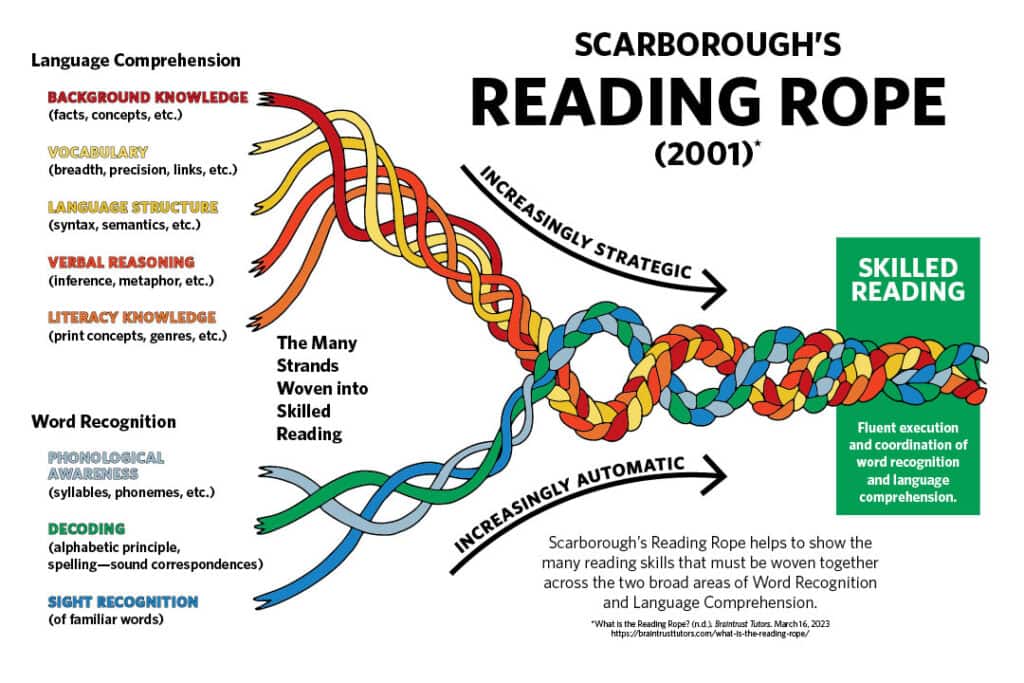
How background knowledge supports reading comprehension
First of all, background knowledge is any preexisting understanding of concepts, situations, ideas, and vocabulary that one can call upon when reading, according to the website We Are Teachers. Research shows that readers who have strong background knowledge on a variety of topics can better comprehend texts, make inferences, and generate appropriate connections.
Perhaps your child is a “word caller.” These readers sound fantastic, reading fluently, with expression, and could seemingly work for Audible as voice-over actors. The problem is when you ask them to tell you the main idea of what they just read. Often the child offers the real-life shrug emoji!
Why is this?
While their decoding skills are fine-tuned, their vocabulary may be weak. This becomes critical with homonyms – words that are spelled the same but can have multiple definitions. Further, the weak background knowledge prohibits the reader from making appropriate predictions or “reading between the lines,” and making inferences. And according to the National State Boards of Education, knowledge compounds, meaning children with more background knowledge tend to absorb and retain new information at a much faster rate.
Still not convinced of its importance? Reading Rockets conducted an experiment in which groups of low socioeconomic status students (SES) were compared with middle SES students for reading comprehension. Using the same texts, the middle SES cohort outperformed the low SES cohort in comprehension due to lack of relevant background knowledge about certain topics among the low SES cohort.
It just makes sense that a reader needs a certain level of information about a topic in order to properly comprehend a passage.
So how does a child develop it?
How to build background knowledge
Clearly, students need an adequate threshold of background knowledge in order to successfully participate in class discussions and comprehend challenging texts. The obvious question becomes: how do you this?
Read physical books. Interestingly, a study from Harvard attempted to demonstrate the importance of background knowledge to reading comprehension. A key finding – though not the main goal of the study – was that children comprehend more while reading physical books rather than digital sources. (Chalk one up for the “veteran teachers” who champion physical books!)
Topic-specific reading. Encourage your child to explore a topic of interest, such as space or dinosaurs or some time frame in history. Embrace multi-media. Yes, physical books (as referenced above) ought to be part of the research materials. However, sites like Youtube would certainly have a vast selection of content on most any topic of interest to your child. Work with your child to come up with a set of questions to explore in variety of formats to allow them to become “experts” of their chosen field.
Continue with read-alouds. While younger children certainly enjoy listening to an enthusiastically read rendition of a Dr. Seuss favorite, older children – upper elementary and middle school age – actually relish a read aloud too! By selecting advanced texts, it allows the parent/caregiver to offer higher level vocabulary words and the perfect opportunity to discuss what they mean.
Take real and or virtual field trips. Summertime provides some extra hours to explore your city and perhaps beyond. Museums, state parks, and historical areas are all prime locations for your child to add to their background knowledge. If traveling is not possible, virtual trips are just a few clicks away on your computer. Many of the most popular museums and places of interest around the world have websites with links to rich content. The American Museum of Natural History in New York City is one such example.
Question your child. As your child is reading and especially after they have read a text, offer up a few questions to determine how much they have comprehended. Not sure what to ask? Here is a link to 21 questions to get you started.
Encourage writing. While reading certainly is the main focus of our discussion, a powerful way to parlay that reading into meaningful, lasting and retrievable knowledge is to encourage your child to write down their thoughts. A key word is write. There are some recent studies that point to the effectiveness of handwriting information versus typing with respect to learning and retaining the information. Simply offering a new journal or notebook (with a teen heartthrob or latest pop music sensation on it) and a selection of pens and pencils can be enough motivation to spur your child to write.
Model reading. The old expression monkey see monkey do has endured for generations due to its simplicity and accuracy. At some point during the day, provide your child with the opportunity to see you reading, ideally a physical book or magazine. Yes, time is increasingly crunched in our modern society, but finding and allocating 10 to 15 minutes of modeling reading will pay off powerfully for your child’s literary background knowledge development.
Final thoughts
The research is clear: if you want your child to read and comprehend complex texts – like those featured in many high school classes and on college entrance exams – then you need to build background knowledge. Encouraging topic specific reading, coupled with complex read aloud texts along with inspiring them to jot their thoughts down in writing is a proven approach to building lasting background knowledge. Finally, building background knowledge pays big dividends. Students will be more confident participating in class discussions, will comprehend more challenging texts, and perhaps in the distant future, they may even win the Tuesday Night Trivia Contest, staged at their favorite local watering hole!
If your child struggles with reading comprehension and or seems to have a microscopic amount of background knowledge, contact Jennifer Disch at Engage the Brain to discover how a Learning Specialist could work with your child to develop these critical reading skills.

Executive Functioning Skills for Kids
What exactly are Executive Functions and soft skills? Here are a definition and eight ways to develop them this summer.
As a parent, you may be eating dinner one night, staring at your ten-year-old child playing with his food, and wonder, “Fifteen years from now, will he be able to stand on his own two feet or will he still be living at home?” You may be surprised to learn that you can accurately predict that. One of the strongest indicators of future independence and success is the development of executive functioning skills for kids—the mental skills that help children plan, stay organized, manage emotions, solve problems, and follow through on responsibilities.
Baloney, may be your first thought (or something unsuitable for print). How can I know how my child will be doing in 15 years? Impossible!
Hang on there, and bear with us.
The best predictor of future success is not grades in school or even your child’s IQ. It is your child’s ability to learn and successfully incorporate Executive Functions (EF) skills in their life. Coupling the soft skills with the EF skills is a recipe for future success.
Soft skills, also known as Emotional Intelligence or EQ, such as empathy, conflict resolution, emotional regulation, and social communication, are the glue that holds hard skills in place. These abilities are closely connected to executive functioning skills for kids, which help children manage emotions, adapt to challenges, and build healthy relationships. Unfortunately, both executive functioning and social-emotional skills have regressed in many children. Reasons for this include increased stress, significant life changes, and a lack of consistent face-to-face social interactions. Hello, spending too much time online!
Development regression is when children lose skills that were previously mastered, according to the Raising Children Network. On the other hand, some children are simply not learning these skills critical life skills in the first place.
While the pandemic may seem to be in the rearview mirror, its ripple effects are still being felt and observed in children. 40% of parents report their children’s social skills and mental health were and still are effected, according to a Gallup News poll. Teacher anecdotal evidence reports an increase in temper tantrums in the classroom, difficulties managing anger in both younger and older students, and sadness. Additionally teachers are reporting student difficulty with attention and focus.
These are exactly the skills your ten-year-old child playing with his food needs to develop in order to put himself in position to succeed as an adult. If not, he will be living with you at home, in the basement, probably still playing with his food.
What exactly are Executive Functions?
Executive Functions refers to “mental processes (executive functioning skills for kids) that help you set and carry out goals. You use these skills to solve problems, make plans and manage emotions,” according to the Cleveland Clinic. The skills include time management, organization, initiation, prioritization, and focus. Your child ought to be using these skills both with their school work and during extracurricular activities.
Unfortunately these skills do not become fully developed until most people are in their mid-20s, meaning children and teenagers are going to struggle with some aspects these skills! Generally, they do not just naturally form over time. Rather, they must be taught directly like any other skill.
What does a child look like who may struggle with Executive Functions skills? They may have some natural ability to focus for longer periods of time but may have a disaster of a backpack. Or, they may be incredibly organized but rarely turn in their homework on time. Perhaps they come home after school, know that they have several homework assignments to complete, but spend seemingly forever scrolling on their phones. All of these situations reveal EF weaknesses.
Any of these look familiar to you?
What exactly are soft skills?
According to Washington State University, “soft skills” are abilities, traits, and behaviors that contribute to how effectively you relate to and collaborate with others. Some examples of soft skills are communication, problem-solving, teamwork, and emotional intelligence.” They go on to say that these skills include the ability to self-guide and work alone and manage one’s time, organization, and adaptability. Sounds like some of the executive functioning skills for kids!
The U.S. Department of Labor states that these are the skills modern companies are looking for in potential employees. While difficult to quantify, qualities such as enthusiasm, problem solving, and critical thinking are in demand.
What does this look like in children?
When students enter an office at Engage the Brain for their session, they look the Specialist in the eye and speak with an appropriate tone and volume. When the session ends, they push in the chair and do not leave anything on the floor: pencils, papers, miscellaneous trash. They say thank you or good bye.
At home your child communicates appropriately with you and other family members. They clean up any toys they were playing with and put them away in the correct spot. When disagreements occur, your child works through them, maintaining regulation.
This is not to say all kids need to be perfect all of the time! Of course not! As mentioned, all of these skills need to be directly taught and modeled.
How to teach the Executive Functions and Soft Skills
This time of year you may be reading a lot (or seeing headlines in various publications) about the Summer Slide, which is the regression of a student’s academic skills over the summer due to inactivity. It is real. However, we are suggesting that – in addition to reading and math activities – parents ought to zero in, with laser focus, on the EF and soft skills during the summer.
How?
Start a family calendar This could be a physical calendar placed in the kitchen – or other high traffic area in your home – where family members write down what events they have each day. Or, if your family is more digitally oriented and each member has a phone, you could set up a Google calendar and share it with each member, who then enters their responsibilities on the calendar. Dates of camps, doctor’s appointments, tutoring sessions, chores, vacations, could all be possible calendar entries.
Establish a daily routine Yes, summer is a time to slow down from the hectic pace of the school year. However, creating a loose schedule that your family follows each day provides the structure, rhythm, and repetition that children can benefit from. Perhaps there is time each morning for exercise, such as a bike ride or visit to a nearby park. Establish a time for individual pursuits, such as practicing an instrument or dabbling in art. Include a quiet time for reading. While the schedule does not need to be run to military precision, having a general sequence for each day allows your children to practice their EF skills.
Keep each child’s space organized Whether it is their bedroom or play area in a common space in your home, help your child maintain an organized space. In school, your child may have a backpack, desk, and/or locker which they need to keep organized. By requiring them to keep their locations neat and organized, they will be practicing these important skills. If they need help, problem-solve with them, not for them. Ask guiding questions. Do you need anything to make this process easier, such as a shelf or baskets?
Plan field trips Summer is a wonderful time to explore your city. In partnership with your child, plan an outing to a local museum, an amusement park or state park. It is critical that your child play a part in deciding where to go. Whether they use online resources or a local library, they will be reading, evaluating, and prioritizing on where would be a fun place to visit. Math skills such as estimating the cost of the outing and determining how long the excursion may take are great ways to sneak in extra math practice.
Host game night Boardgames and card games are rich with opportunities to practice EF skills. Planning strategy, regulating their competitive fire, and taxing their working memory are just a few skills your child will be using, depending on which game you play. Whether it is just your immediate family, or your child invites a friend, game nights are fun and effective ways to engage with EF skills.
Allow kids to work out differences It is summer, and temperature and tempers can both boil, especially if your child is neurodivergent, thinking and learning differently. If/when a hubbub erupts between siblings or friends, allow each to settle down, if necessary, before trying to coach them to an acceptable conclusion. Model strategies like taking turns and both cleaning up items that were played with.
Maintain bedtime and wake-up time As part of your daily routine, maintain both a bedtime and wake-up time, though each could be adjusted reasonably a little later than during the school year. Establishing and enforcing these times allows your child to practice time management and not allow teens to sleep away half the day! Plus it makes returning to school in the fall a little easier.
Manage screen time Screen time is always a challenge during the summer, especially with children who think and learn differently. Perhaps part of your daily schedule provides 60 minutes for screens, whether that is playing video games, scrolling social media, or watching television. By providing a concrete time amount, your child must prioritize how they will spend their allocated screen time.
Final thoughts
As parents you may understandably be focused on maintaining and/or improving your child’s academics this summer to avoid the dreaded summer slide. In addition to stoking those skills, do your child a future favor (one that will pay dividends when they are adults) and include the EF and soft skills too. Because the research is clear – the best predictor of future success is a child’s ability to learn, practice, and eventually master the EF skills, along with the soft skills. Put another way, there is an African proverb that states, “The axe forgets, but the tree remembers.” Teaching your child the skill of empathy will carry them far in whatever direction they wish to go. And hopefully not playing with their food along the way!
If you have questions about how to teach and develop Executive Functions skills or the sift skills, contact Jennifer Disch at Engage the Brain to discover how a Learning Specialist could help teach these critical life skills.
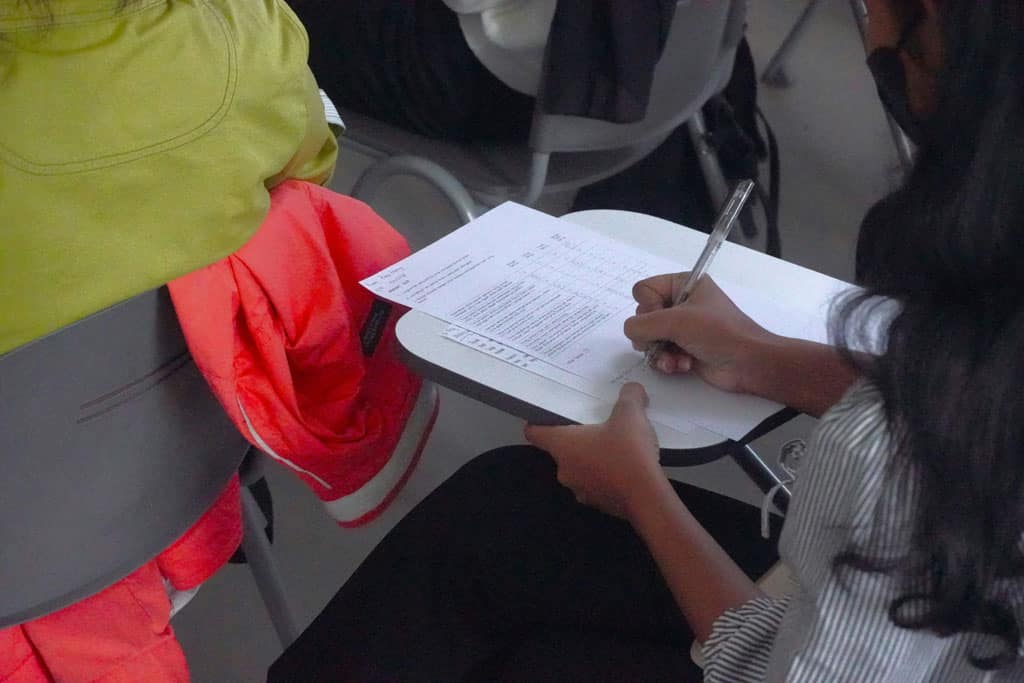
Can you prepare your elementary student for standardized tests? Yes, with the following information.
If you are a parent reading this, close your eyes for a moment and think back to when you were in either elementary or middle school. Do you remember taking standardized tests? Some of you may have fond memories of proudly displaying what you knew on these exams, viewing it as an opportunity to demonstrate mastery, whispering to yourself, I got this. Others, perhaps, have drastically different memories! Fear, anxiety, or even nonchalance, depending on your approach to school, uttering something like, What a waste of time.
Standardized tests have been woven into the fabric of K-12 education for generations. And with end of the school year in sight, this year’s wave of tests is upon the students. Your children are probably feeling much like you did many years ago when you took the tests. Some may be excited. Others would rather saunter across the Sahara Desert sans sneakers with no water (and no Nintendo Switch). However they are feeling, parents hopefully want their child to do their best.
Perhaps you may be wondering: can a student prepare for standardized testing? More on that below.
Generally, state testing is designed to evaluate how well students are mastering state mandated curriculum standards, ensure school accountability for federal funding, and monitor student progress.
Unlike classroom grades, which can be subjective and affected by grade inflation, standardized tests provide a consistent, uniform benchmark of academic skills like reading, math, and science.
Discrepancies exist between the content on the standardized tests and what is being taught in the classroom. In theory, curriculum aligns with state standards, which aligns with the state test. In reality, teachers use lesson plans and materials that best meet the needs of the students in their respective classes. Sometimes these do not precisely match! Other times the pacing – outside of teachers’ control – does not allow for all students to master the concepts taught.
Given all this overwhelming information, what can be done to help your child succeed on these tests?
What do districts actually do with the testing information?
Standardized testing in the United States is a $1.7 billion business annually, according to Education Week. A significant portion of this money goes to vendor companies who develop and score these tests. With this insanely large amount of money invested in this realm, it is no wonder schools place so much emphasis on them!
Information from the tests can be used for:
Entry into next year’s classes Depending on results, a student may get the approval to take an AP class or an Honors class.
Patterns that need to be addressed Perhaps the majority of students consistently score low in one section on the test. Instructional approaches can be tweaked to better address the concerns.
Teacher evaluation Unfortunately, these tests can be used for part of teacher evaluation and even for bonus money earned.
Tightening the focus, here in the Sunshine State students take the Florida Assessment of Student Thinking (FAST) based on Benchmarks for Excellent Student Thinking (BEST), a progress monitoring system covering VPK through grade 10 in ELA and VPK through 8th grade in math, according to the Florida Department of Education.
Additionally there are End of Course Exams (EOC) in subjects like Algebra 1, Biology, and U.S History.
Private school K-12 students may take TerraNova or the Iowa Test of Basic Skills (ITBS). Certainly the private schools use the results in much the same way as public schools do, informing instructional practices and curriculum purchases.
What can affect performance?
Beyond instruction in the classroom, mental health concerns of the student, absenteeism, parent education level and occupation all play important roles in student performance on these tests.
According to a Harvard Graduate School of Education study, cortisol levels – the hormone associated with stress – increased during standardized testing in a group of charter school students. Higher stress equals lower performance. Complicating matters is students who come from environments with chronic high stress levels – low income, violence in the neighborhood- tend to score more poorly on these types of tests.
Perhaps not surprisingly, the time of day a student takes a standardized test can affect performance. One study found that first thing in the morning is optimal, and for every hour later in the day the test is administered, there is about 1% decrease in performance. The reason is chalked up to cognitive fatigue, or in plain terms, the brain – and the student housing it – get tired from a day of thinking and learning.
Parent attitudes towards standardized tests matter too. A student must strike the right, healthy balance when preparing for a test. Too much emphasis and cortisol levels rise. Not enough focus and perhaps a student does not take the test seriously. Parents need to encourage their child to simply try their best and to ensure they are well fed and well rested prior to the test day.
Do Opt-out groups still exist? Statistics are difficult to find, but with students leaving the public schools for other options such as private school or homeschooling, a fair question to ask is whether many of these families exiting the public schools were part of the opt-out group.
How to prepare for standardized tests
And now…the million (or is it billion) dollar question: Can you help your child prepare for a test that is supposed to cover the entire school year? Yes you can!
Familiarize themselves with the test format. Know all the different question formats. Some can be tricky, such as using drop-down menus (if taken online), how to access tools such as a calculator, and/or selecting more than one response in multi-select vs. multiple choice format! Take practice tests, which are available on the state’s website.
Know and use test-taking strategies. Know the amount of time allowed in each section and pace their way through it. Eliminate answer choices when possible.
Master test vocabulary. Each of these terms means a different thing: Analyze, synthesize, justify, identify.
Speak with your child’s teacher. Ask in what areas they may need more review and practice, then target those skills using teacher-suggested tools or even tutoring.
Develop a positive mindset. Standardized tests measure a moment in time, not your child’s worth or intelligence. Reinforce this at home!
Reduce anxiety. Teach your child simple relaxation techniques such as breathing exercises or visualizing success. As referenced above, too much cortisol and performance will suffer.
Final thoughts
Standardized tests are big business and certainly are not going away any time soon. Parents have probably burned into their memory their experience of sitting in a classroom, taking some version of these tests some 20 or 30 years ago. The tone and wording with which a parent shares these recollections with their child can affect the child’s performance on their standardized test. Knowing there are ramifications: entry into more rigorous classes and even teacher evaluation, parents ought to frame these tests as opportunities, not something to dread. Ensuring your child knows the format of the test and helping them build a positive attitude, will go a long way to promoting their success on the exam.
If you have questions about standardized testing or are concerned about how your child will perform on their exam, please contact Jennifer Disch at Engage the Brain to discover how a Learning Specialist could help your child develop the necessary skills to crush their state standardized test.

Who can qualify for K-12 scholarships in the state of Florida? And how can they be used?
When you think of the state of Florida, many things may come to mind. Heat. Humidity. Beautiful beaches. Theme parks. Maybe even astronauts. One thing that has become more prevalent in the Sunshine State is the wide selection of schooling opportunities for families of Kindergarten through 12th grade students.
Of course there is the traditional public school system, as well as a variety of excellent private schools scattered about the state. Beyond these options, there are a plethora of virtual options including the Florida Virtual School, a public online school. And, becoming increasingly popular are hybrid schools, like the North Park Learning Group, which feature a part-time schedule for homeschooled students.
Parents with neurodivergent children with learning differences such as dyslexia, dysgraphia, or dyscalculia often struggle to find the best educational setting. And what about students with Attention-Deficit/Hyperactivity Disorder (ADHD) or Autism Spectrum Disorder (ASD)? Truth be told, many of these students are twice exceptional, meaning they have been diagnosed with two of these challenges!
There is a popular expression, “Bloom where you are planted.” But for students who think and learn differently, not all bloom just anywhere. They need special soil (school setting), a particular type of fertilizer (instructional approach), water (instructional materials), and lots of sun (positive reinforcement) in order to bloom.
Given the increased selection of educational settings, parents have more choices now than ever to find the best schooling option for their child. And if private school or a hybrid school or home school are a few of the options being considered, then parents will want to know about the scholarships available to them in the Sunshine State.
Parents can even use certain funds on tutoring for multi-sensory math instruction, Speech Language therapy, reading services like Orton-Gillingham, and even Executive Functioning coaching.
Accessing the scholarships
To learn about and access the different scholarships available, parents must first apply to a “clearinghouse” of sorts that connects parents to the scholarships. In Florida there are two: Step Up for Students and AAA Scholarship Foundation, both non-profits.
Step Up for Students is a non-profit organization that manages scholarships for Florida’s Kindergarten through 12th grade students. It provides funding for educational expenses like private school tuition, homeschooling, curriculum materials, and even transportation. Funds may be used for therapists and tutoring.
AAA Scholarship Foundation is similar to Step Up for Students in that it is a non-profit that manages scholarship opportunities for Florida K-12 students. However, they focus on only two scholarships and generally assist economically disadvantaged families in navigating the complex process.
The application processes are fairly straightforward.
The Scholarships Available
The Family Empowerment Scholarship for Students with Unique Abilities (FES-UA)
Formerly known as the Gardiner and McKay scholarships, the FES-UA helps families of students with special needs, which is funded by the Florida Department of Education.
Structured as an Education Savings Account (ESA), money can used on schools, therapists, specialists, curriculum, homeschool alternatives, and even technology.
It is available to students age 3 through 12th grade with the average scholarship award of $10,000.
The Florida Department of Education provides a Frequently Asked Questions document about this scholarship.
Personalized Education Program (PEP)
Funded through the Florida Tax Credit Scholarship Program (FTC), it was developed to help serve the homeschool population who would like access to an ESA to help fund their child’s learning.
It is open to Florida K-12 students who are not enrolled in either public or private school, and it provides access to an ESA, like a bank account, which allows families to fund various educational expenses.
The Florida Department of Education provides a Frequently Asked Questions document about this scholarship.
Family Empowerment Scholarship for Educational Options (FES-EO)
This is available for all K-12 students in Florida, regardless of household income, and awards an average of $8,000 for private school tuition and related expenses.
The Hope Scholarship
According to the Florida Department of Education, a student may receive the Hope Scholarship “if he or she has been subjected to an incident of battery, harassment, hazing, bullying, kidnapping, simple battery, robbery, sexual offenses, harassment, assault or battery, threat or intimidation, or fighting at the public school.” The school must provide information about the Hope Scholarship within 15 days of the incident.
The scholarship allows a student to transfer to another public school that has capacity or an eligible private school and amounts awarded average between $7,700 and $8,000.
Final thoughts
As the school year creeps to a close in Florida, parents may be considering other schooling options for their child for next school year. Some parents may not know there are scholarships available to help fund different educational settings. Not every child blooms in the typical brick-and-mortar school that follows a rather rigid and repeating schedule. Some students, especially neurodivergent ones, need a different approach, and the various scholarships, like the FES-UA and FES-EO, may help fund the setting a child needs to thrive and blossom into the best version of themselves.
If you have questions about the various Florida K-12 scholarships or would like to discuss different schooling options and how your child could reach their full potential, please contact Jennifer Disch at Engage the Brain to schedule a discovery phone call.

Why bring your child to Engage the Brain for Orton-Gillingham? Because of the impressive coursework completed by the Specialists and the ongoing mentorship process that is the ethos of the organization.
What exactly is Orton-Gillingham? According to the Orton-Gillingham Academy, it is “a direct, explicit, multi-sensory, structured, sequential, diagnostic, and prescriptive way to teach literacy when reading, writing, and spelling do not come easily to individuals, such as those with dyslexia.” It goes on to state that is an “approach,” not a method or system.
The curricular content is derived from two primary sources: a body of knowledge and practice that has been validated over the past 80 years; and also from scientific evidence of how people learn to read and write.
A multi-sensory approach is one of the key elements. It is through visual, auditory and kinesthetic pathways simultaneously that helps imbed the language patterns in students.
Another key is that it is Individualized and diagnostic for each student. There is no universal approach or starting point, with each student truly having their own lesson plan.
Even students who can decode fairly well but who struggle with comprehension, – sometimes known as word callers – benefit from OG. How? By reducing the cognitive load by making decoding automatic. Rather than guessing at and or omitting and skipping seemingly unimportant words in a text, OG will boost the confidence to decode and attack each word easily.
Engage the Brain OG Specialists’ coursework
Engage the Brain is fortunate to have 25 Specialists who completed Orton-Gillingham Academy coursework. Two members of the team are Associates of the Orton-Gillingham Academy and are currently working toward completion of the Certified level. Four Specialists have completed the Classroom Educator coursework, and 21 have completed Associate-level coursework. Finally, the coursework and practicums were completed through an accredited Training Fellow of the Orton-Gillingham Academy.
Sabrina Sullivan, A/OGA and Student Services Director, at Engage the Brain, said, “All OG Specialists receive ongoing mentorship and support from our Student Services Director and OG Field Expert, an Associate of the Academy. Through regular lesson planning meetings, case discussions, and structured mentoring, we maintain high standards of implementation and remain current with research and best practices – ensuring instruction stays flexible, responsive, and individualized.” Like the students we work with, Specialists are strongly encouraged to continue to think, learn, and grow.
Who benefits from OG instruction?
OG is known as the gold-standard for teaching individuals with dyslexia to read. Clearly this population makes up a good percentage of the students EtB works with. However, Sullivan states, “It also supports students with ADHD, dysgraphia, language processing weaknesses, and foundational reading gaps.” She goes on to say that OG benefits early readers who need a strong phonics foundation as well as older students who are missing important decoding or spelling skills.
Sullivan said, “Students who need vocabulary development, improved fluency, or stronger reading comprehension also benefit from OG’s individualized approach.” This is due to the explicit, systematic, and multi-sensory approach that OG demands. Finally, she shares, “it provides the clarity and structure many learners thrive on, with intentional scaffolding and individualized pacing built into every lesson.” Clearly, just about any student could benefit from this type of approach.
Why should a student come to Engage the Brain for OG?
Many people head to Google and search for local business recommendations. Of course any savvy consumer recognizes that the first businesses to pop up are there because they paid to be! But refine your search a little more, and suddenly a different selection of companies populates your screen. Try it: Best Orton-Gillinham instruction in Orlando, FL. Guess what is the first business after all the paid ones? You guessed it! Engage the Brain.
Perhaps there is some algorithm magic going on, but EtB appears in the search results because families flock to it for their educational needs. Sullivan, the Student Services Director, shares the following:
“At EtB, OG instruction is individualized and grounded in ongoing error analysis. We begin with baseline assessments, use our scope and sequence to design targeted lesson plans, and adjust instruction in real time based on each student’s responses and demonstrated needs. Our specialists integrate reading, spelling, and writing in a cumulative, connected way, building confidence alongside skill. We look at the whole learner and intentionally develop strong relationships because a strong literacy foundation begins with trust.”
She adds that families stay informed through periodic progress monitoring, session and progress logs, and brief check-ins as needed. And that EtB has relationships with several local schools, which allows students to receive OG from EtB Specialists while at their institution during the school day.
What do students say who had OG instruction at EtB?
All this educational jargon is fine and well, but what do actual students say who have attended EtB and received OG from trained Specialists?
They flattered us with felicitations!
Lauren S., who attended EtB from 6th grade through 11th grade and is now a freshman at the University of Alabama, said:
“When I was diagnosed with dyslexia in sixth grade, I was scared and unsure – especially about tutoring. Sabrina met me with patience, understanding, and belief. Through Orton-Gillingham instruction, she helped me build confidence and skills I never thought I’d have. What I was once skeptical of became something I truly looked forward to. Because of Sabrina, I went from struggling in middle school to attending the University of Alabama and earning a spot on the President’s List my very first semester. She changed my life.”
Griffen G., an 8th grader who has attended EtB since 2nd grade, shared the following:
“OG’s curriculum has enhanced my learning. Especially Mrs. Sabrina, she has taught me most of the knowledge I know today and has helped me understand myself as a student. She is super easy to understand and can relate to my struggles and how I should navigate them.”
Valentina M., a 5th grader who has attended EtB since 1st grade, said:
“Mrs. Sabrina (OG) has taught me different ways to learn, which have helped me read, write, and spell better.”
We could go on and on but you hopefully get the idea. Students, the most important part of this equation, support EtB.
Final thoughts
The Orton-Gillingham approach has benefited so many students at Engage the Brain. Clearly students with dyslexia are the largest group receiving these services, but there are multiple other subsets of students who are thriving from their OG sessions, including those with ADHD, dysgraphia, and language process weaknesses. There may be other OG practitioners in the area, but none have “the expert instruction, individualized planning, and progress monitoring, which allows us to support lasting growth, not just short-term improvement,” as Sullivan reminds.
If your child struggles to read, for whatever reason, contact Jennifer Disch at Engage the Brain to discover how an Orton-Gillingham mentored professional could help unlock the mysteries of the English language and launch your child into the world of reading and all that it has to offer.

Why is it so important for kids to have hobbies? Because the benefits pay dividends in so many ways. Read on to learn more about how to help your child find their passion.
During the month of February, Cupid is busy pairing up people with similar interests and compatibility. With a nudge from the little fellow, people can suddenly see each other in a new and more attractive light. This month, however, we are encouraging parents to play matchmaker with their child and a hobby. Help your child find their passion.
All kids benefit from having hobbies. But children who think and learn differently, REALLY benefit from successes gained from non-academic activities. Why? Because of the massive amounts of emotional scar tissue many of these children have built up from repeated failures in school.
And please do not confuse this with high school students looking to impress future colleges.
Just because your child played the sousaphone for six weeks at the local senior center will not garner them extra attention from Stanford’s admissions squad. The goal is to find the authentically right activity for your child.
What this is about is finding an activity that your child is passionate about and brings them joy.
The benefits of passion projects for kids
There are so many reasons parents ought to encourage their child to find a hobby they enjoy, just for the sake of the activity.
One study found that young adults who participate in extracurricular activities had lower levels of anxiety and depression and higher levels of satisfaction for life.
Success in the activity can build self-esteem and agency, which can be transferrable to other skills. Hello academics! The thought process going, if I can put effort into (fill-in-the-blank hobby) and see positive results, then maybe, just maybe, if I put the same effort into school, I will see positive results.
Often times these activities can provide opportunities for social connections. Kids who think and learn differently can struggle with this critical skill, and finding peers who share the same interest can break down some of the social walls.
While they may not even know it, your child will also be practicing and developing their Executive Functions skills, such as time management, goal setting, perseverance.
Critically, these hobbies can recharge their battery, providing more space and opportunity to tackle more frustrating parts of life. Everyone needs time to unwind and and recover from the day’s or week’s events. Brains can fill up and reach capacity. Hobbies refuel the brain!
Finally, passion projects can reduce those pesky negative behaviors. Like a beautiful garden that is free of weeds, two things cannot occupy the same space. Psychology Today shares that if your child is busy with a hobby, they will not be acting out or participating in harmful habits.
How parents can help foster the process of discovery
Of course you, the parent, will need to offer guidance and perhaps motivation to push (lovingly shove?) your child into trying an activity. What could this look like?
Pay attention to your child’s interests. What content do they consume on tv? On social media? What do they read about? Topics of their video game selections? All of these answers are clues for possible areas to pursue.
Provide opportunities. Offer to pay for an instrument rental and lessons. Watch a sports team practice to see if it really does appeal to them. Look for free trial opportunities in the community such as an art class.
Share your hobbies. Do not assume your child knows you love photography. Share the details and why you are drawn to a particular activity.
Help build vocabulary. Young children – elementary age and perhaps even some middle school age – may not have the word bank yet to state their interests. If you see your child loves to build with Legos, you could say they may be interested in engineering. If your child loves dabbling in the kitchen, perhaps they have an interest in the culinary arts. Help your child make connections between their hobbies and the real world.
Stick-to-itiveness vs healthy boundaries. While you want your child to develop perseverance and work through blocks and obstacles, you also want them to establish healthy boundaries and to know when they simply have too much on their plate. Open and honest discussion is the best path forward.
Set realistic expectations. Quite simply, it is ok not to be the best. Encourage participation for participation’s sake, not external validation or rewards.
How to keep your child interested in the activity over time
Once your child has engaged with an activity over a period of time, naturally they may become less interested in it. This is just human nature. But children who think and learn differently, especially those with ADHD, may become bored more quickly than their neuro-typical peers.
To help foster persistence try these strategies:
Reduce friction to the activity. In other words, make it easy for your child to participate. Have whatever necessary supplies on hand in the house, as appropriate. Provide time in the day’s schedule (more on this below). Eliminate your child’s excuses!
Keep it low pressure. As mentioned above, it is okay not to be the best at the activity. Focus on fun and improvement rather than external rewards.
Celebrate wins. Whether big accomplishments or minor ones, acknowledge and celebrate the success.
Locate and introduce mentors. Connecting your child with a local mentor in your community can be powerful. Whether the mentor provides advice and or inspiration, providing opportunities for your child to meet with experts in the given field pays dividends. And promotes social connections!
Provide reading materials about the topic. When this writer was school-age, and disliked everything about school and education, my mother kept a steady stream of Modern Drummer and Skateboarding Magazines flowing into the house. And, as most ADHD individuals are prone to do when presented with a topic of interest, I devoured every word in those magazines, which (no surprise to my sneaky Special Education teacher mother) improved my reading skills.
Create a routine. In a perfect world your child would come racing home from school, give you a big hug, tell you how great a parent you are, then happily skip off to practice their bassoon. Of course this simply does not happen in today’s modern world! So help your child develop an after school routine that includes homework time (of course) and time for the hobby.
Final thoughts
With big red hearts and Valentines’ Day decorations pervasive during the month of February, channel your inner Cupid and point an arrow at your child, connecting them to a passionate hobby. With some guidance from you, your child can find an activity they enjoy that brings them pride and satisfaction. Your child may be less anxious, practice their executive functions skills and could even find some like-minded peers, allowing for social connections. Having success is the goal, especially for kids who have piled up the failures in school. Passion projects can truly be the antidote to struggling learners with troubling self-esteem, launching them into other successes, including in school.
Engage the Brain encourages all of our families to explore extracurricular activities and to find the one hobby that truly resonates with your child.

How can parents best support their child’s Executive Functions tutoring sessions? By following these 8 strategies that promote success.
At Engage the Brain (EtB), we offer a suite of services that includes Orton-Gillingham instruction (the gold-standard for teaching children with dyslexia to read), Speech-Language therapy, multi-sensory math instruction, and Executive Functions coaching. It is the last specialty area that is popular, but also often misunderstood. A child may struggle with multiple challenges all at the same time. For example, they may have ADHD and struggle in math. Or they are diagnosed with dyslexia and are completely disorganized, with a sprinkle of anxiety mixed in, too.
Is it an Executive Functions (EF) weakness? An academic issue? Often it is a combination of factors.
This is where academic testing, which EtB also offers, could help determine a road map for help: a starting point, check-ins, and an ideal destination. If your child is fine academically – their teachers report that they get the concepts in class – yet still earns relatively low grades, perhaps there is an EF weakness.
Executive functions are the cognitive skills, managed by the brain’s prefrontal cortex, that allow us to plan, focus, prioritize, and accomplish tasks. A few popular analogies are the air-traffic controller or conductor of an orchestra. While there is no universally agreed upon set of skills, they typically include: planning and prioritizing, organization, goal setting and completion, task initiation, flexibility, and self-regulation.
An exploratory and information-sharing phone call with Engage the Brain is often the first step to determine the best course of action for your child.
How parents can support the EF coaching sessions
Once the decision has been made to begin EF coaching sessions, there are a number of suggestions Engage the Brain likes to offer to parents to help them – and especially their child – get the most out of the sessions.
Yes, you hired us to teach your child a set of skills. However, like any other class, you need to continue to offer support. How?
Question and compliment your child. For example, Are you using the planner you agreed to use? Or I love that you are writing down events on your wall calendar.
Know the skill(s) being taught during the session. If the focus is currently on organization, ask a follow-up question on the way home. “What did you talk about in your session today?” This helps gauge what your child is truly taking away from the sessions. If your child does not relate something about organization (or whatever the focus skill of the session was), please share that with the Specialist so that they can follow up. (More on that below)
Use the same language as the Specialist at home. Engage the Brain is fortunate to have a team of EF coaches, and two of them emphasized the importance of speaking the same language at home that your child will hear in their sessions. For example, both Specialists shared the importance of reflexive questioning and using the questions such as, “Where is your attention right now? and “Where should it be?”
Share information with the EF coach. Whether you send an email, text, or prefer face-to-face, let the Specialist know about big projects or tests that are coming up. Also inform us about the on-going challenges at home and or at school.
Can’t vs Won’t. Shout out to Seth Perler, well known EF Coach, for sharing this important nugget. You may think your child is being stubborn and has the ability to keep themselves organized, planned, focused, etc, if they just try harder. However, in reality many kids simply cannot organize and plan and focus due to lack of a skillset. It is during our sessions that we are teaching the EF skills that will allow your child to eventually perform these necessary skills.
Understand scaffolding. In a perfect world your child would come into our office, meet with a Specialist two or three times, and suddenly become an EF guru themselves and be able to teach these skills to all of their closest friends and relatives. But that is not reality! Each child is on their own timeline and journey. Those with learning differences and challenges – like ADHD and EF weaknesses – may take longer than their neurotypical peers. So, we start where your child is and begin the scaffolding process from that point, providing tools and strategies to launch them into the EF orbit and begin their journey towards independence.
Consistent attendance is key. Like any other skill someone is trying to learn, consistent practice is critical. If your child is scheduled for once a week sessions, please do your best to get them to the appointment. Disruptions, frequent cancellations, and stop-start inconsistencies will undermine the effectiveness of the process. Bonus: you could be modeling planning and time management by placing the sessions on a family calendar, either a physical one you keep in a handy spot in the house or a shared digital one such as Google calendar.
Foster a Growth Mindset. How many children does it take to change a light bulb? Just one, but the bulb must really must want to change! (I hear the groans!) In all seriousness, a child must show up to our sessions with an open mind that they can and want to improve. Developing a growth mindset, which is the belief that we can improve a skill through hard work and targeted practice, is critical to the success of the sessions.
Final thoughts
Executive Functions coaching is tricky, in that like most other skills being taught, the journey to proficiency is not linear. Parents can nudge the process along and make the sessions more effective by actively questioning and complimenting their child on the EF skills being taught and using the same language. Remember to share pertinent information with the Specialist – ongoing challenges, big projects coming up, etc – so everyone is on the same page. And try to be as consistent as possible with attendance.
Imagine a picture of your child smiling proudly because they are doing well in school and managing all of their extra curricular activities. Just out of frame of this photograph is the EF coach, who is your child’s most enthusiastic cheerleader, providing them with tools and strategies for success. That’s our goal as an EF Coach: to be just out of frame but close enough for your child to know we are there with anything they need.
If you child struggles with EF skills such as organization, time management, planning and or prioritizing, contact Jennifer Disch at Engage the Brain to discover how an Executive Functions coach could help your child better manage their academic and personal responsibilities.