

Why do students need to learn the basic math facts? Why do some struggle to learn them? And what are the best strategies and techniques to learn all four operations?
We posed the question: What is one of the hardest things to do in the world? to ChatGPT. The response: letting go of either someone or something you love or care deeply about. While we do not want to make light of losing someone or something special, anyone who has tried to teach the basic math facts to a child can relate to the hardest thing in the world part.
Some kids seem to learn, store and access the math facts easily. Others not so much! It is like they are trying to learn some combination language made up of Chinese, cryptocurrency terms, and Scottish brogue. There is a twinkle of familiarity in there, but most of it simply does not register.
However, to graduate from high school in most States, students must take four years of math, including passing both algebra 1 and geometry. And in order to successfully navigate these higher level math courses, students need a solid foundation with the four operations – addition, subtraction, multiplication, and division.
Why learn the facts
Some may say memorizing facts that can be easily found is an outdated skill. Simply punch 9 x 6 in a calculator and it immediately spits out 54. Unfortunately, math is the ultimate building block class, where one skill typically leads directly into another, which builds off of it and this then repeats. Learning the basic facts for all four operations is a foundational skill which allows more complex math to make sense.
Ed Week reports that cognitive scientists state it frees up working memory when solving higher level problems. A firm grasp of the facts also promotes efficiency and less frustration later in school when concepts get more challenging.
Additionally, it boosts students view of themselves as math students and provides confidence to tackle higher level math concepts.
Any math phobic parents out there? Knowing the facts decreases math anxiety, which often rears its jittery head when students struggle to learn the facts and are presented with more difficult math problems.
Convinced to tackle the facts with your child?
The goal is by the end of 5th grade to have all four operations locked in and automatic. Get the facts into long-term memory, where they can be stored and easily accessed.
Why some students struggle to learn the facts
There are many reasons a student may struggle to learn the math facts. They may have a learning difference like dyscalculia, which makes math more difficult. Another reason a student may wrestle to learn the facts is a processing issue. Slow processing can hinder their ability to see the patterns embedded among numbers. These students may benefit from an auditory approach to fact practice rather than traditional flashcards.
Yet another reason some students struggle to memorize the basic math facts is an attention issue such as ADHD. If it is not interesting or shiny – or a video game – a child may have zero interest in mastering the facts. These kids may need creative ways and salesmanship to encourage them to focus on learning the facts.
Further, some kids – and by proxy their parents – simply do not practice enough. It takes an intentional and disciplined approach. Adding five minutes each school night after homework to practice the facts could yield massive gains.
While it is absolutely true not all students learn the facts in the same way or in the same time frame, it is critical that each student commit to a practice schedule and chip away at learning them.
Strategies to learn each of the operations
We are not born with a math center in our brain waiting to be tapped into. Like so many subjects in school, math is an acquired skill that must be systematically taught. Typically, we start with addition, then subtraction, after that multiplication, and finally division. To that end, here are some suggested strategies and techniques to teach the four operations.
Addition
Follow a sequence: start with +0, then +1, +2, …
Use strategies like doubles and doubles plus one. An example of doubles is 5 + 5 = 10; an example of doubles plus 1 is if 5 + 5 = 10, then 5 + 6 = 10 +1 or 11.
Practice numbers that add to 10: 9+1, 8+2, 7+3, 6+4, 5+5
Use physical objects to concretely represent the fact
Use number lines to help “see” the jumps
Subtraction
Use fact families 4 + 3 = 7… so 7 – 4 = 3
Count backwards on a number line
Follow a sequence such as -1 fact family, then -2, etc.
Focus on facts that add to 10: 10 – 1 = 9, 10 – 2= 8, 10 – 3 = 7….
Count up when the two numbers are close to each other. For example, 9 – 7 count up 8, 9 for a difference of 2, rather than counting backwards 7 times.
Subtracting 9 can be intimidating, so imagine subtracting 10 then add 1. For example, 16 – 9, think 16 -10 = 6 + 1 = 7 so 16 – 9 = 7
Multiplication
Follow a sequence: x 0, x 1, x 10, x 5, x 2 these are over 50% of the facts!
Use songs such as this classic video from School House Rock
Practice skip counting: 3, 6, 9, 12, 15… Or 4, 8, 12, 16, 20…
Practice filling in blank multiplication charts
Use picture related flashcards, such as 3 spiders with 8 legs each to model 3 x 8 = 24. Woodin math has many more suggestions.
Timed tests – some kids thrive on competition and love the challenge of trying to beat a previous time for completing 30 facts. However, other children do not perform well under pressure due to processing issues or dysgraphia or a general dislike of competition. You know your child best!
Division
Use concrete objects to model the problem. 10 marbles divided into 2 groups equals 5 marbles in each group.
Focus on fact families: if 8 x 5 = 40 then 40 / 8 = 5. Incorporate triangular flashcards:
If you cover the 4, then the problem is 12/3. If you cover the 3, then the
problem is 12/4. If you cover the 12, then it becomes a multiplication problem of 4 x 3

The Math Learning Center has this great resource that models division using different strategies, including area models, arrays, and skip counting.
Engage the Brain Specialists share their favorite games and activities
Catherine Griffin, Math Specialist:
A game I like to play with addition is “compensation golf” where we use a 10 frame, roll 2 dice, add the numbers and see how close you are to 10. At that point you can choose to roll a single dice, roll both dice, or keep your score. If you get to 10, you don’t get any points, but if you are under or over, that is your score for the round. Similar to golf, the lowest score wins.
One of my favorite tools to use with learning multiplication facts (and can be used with division) is skip counting with beads on strings. Then we usually stand up and play catch while skip counting. One of my students I take outside and we play catch with a football while counting. If a student knows their multiplication facts well, we might start with a random number like 3, and then add 7 back and forth. (It’s a good exercise for me too! ???? ).
Jennifer Disch, Founder, Educational Director
Multiplication Battleship – played like the tradition game but with a math twist.
Broken Calculator – great to build an understanding of how numbers can be put together in different ways.
Strike it Out – combines critical thinking and fact fluency. Watch the video to learn more!
How Close to 100 – great game that uses graph paper (10 by 10 grid) and dice to practice multiplication facts.
Libby Couch, Math Specialist:
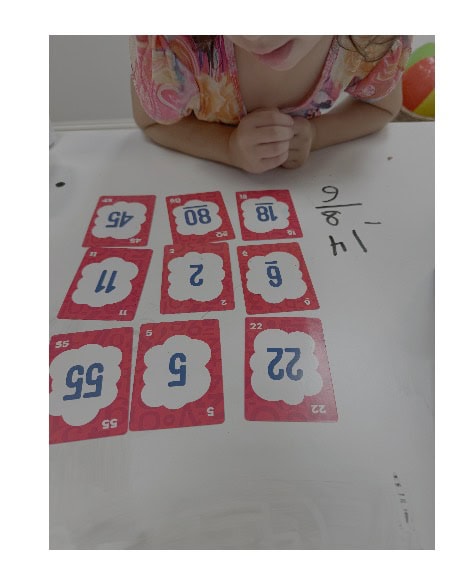
One of my all-time favorites is Shut the Box—it’s a great game for practicing number sense, addition, and strategic thinking.

A game I really enjoy is Proof—it’s a fast-paced mental math game that challenges players to find equations using the numbers on the cards. It’s great for strengthening number fluency and flexibility.
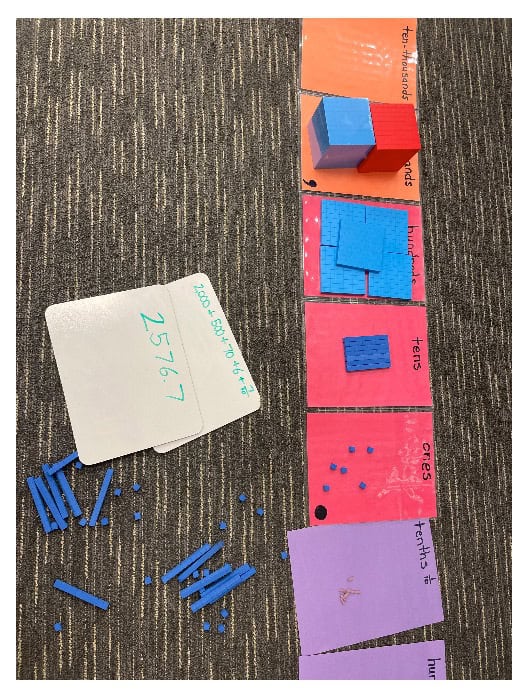
I’m also a big fan of incorporating movement into math, especially using giant number lines or place value charts for jumping games. These types of activities help reinforce number relationships, rounding, and even basic operations in an interactive way.
Final thoughts
Learning the basic math facts for all four operations is challenging but necessary for success in higher level math classes. Developing a plan, which is intentional and consistent, is the “secret” to success for your child to master the facts. There are an almost unlimited number of ways to practice the facts, but sticking to a schedule, adding in movement when appropriate, incorporating games and technology and progressing in a logical order ought to be part of the plan. And do not forget to reward progress!
If your child child has struggled to learn the basic facts and or has other challenges in math, please contact Jennifer Disch at Engage the Brain to discover how a math learning specialist may be able to guide your child to become a more confident and successful math student.

Social media sites have changed the rules for minors. What does the law say? And what are the benefits and dangers of social media to kids?
The words social media conjure up a variety of thoughts and feelings depending on who is asked. On the positive end, some may say social media allows them to stay connected with family and friends who live far away and participate in online communities not available near by. On the negative end, others may share tales of critical and hurtful comments or encountering objectionable content. Wherever you stand on social media and its place in society, children live a different existence online, and some legal changes that went into effect recently may alter young people’s access to and use of social media sites.
First, let’s agree on what social media is.
According to Investopedia, social media refers to a variety of technologies that facilitate the sharing of ideas and information among their users. The sites typically feature user-generated content that lends itself to engagement via likes, shares, comments, and discussion. Some popular social media sites include Facebook, X (formerly Twitter), Instagram, TikTok and Youtube. (More on those later.)
In the state of Florida, as of January 1st, 2025, CBS News reports the minimum age to create an account is now 16. However, 15 year olds may either keep or start one with parental or guardian permission. Additionally, the law requires the sites to essentially terminate the accounts of existing minors. There are lawsuits currently filed that are challenging the law’s constitutionality.
Of course kids can lie and set their birthdate on the log-in site as “16,” but then when their reported birthday turns 18 the companies are free to sell their data. As someone said, data mining is the new oil.
What follows is an exploration of social media habits of kids, some of the potential dangers and benefits kids face while on the sites, and finally, some popular sites many children spend time on.
Amount of time kids spend on social media
The numbers, frankly, are frightening! According to a Gallup survey, time spent on social media sites breaks down like this:
4.1 hours per day for 13-year-olds and 5.8 hours per day for 17-year-olds. Girls tend to spend an hour more per day than boys on social media. Youtube and TikTok are the most popular sites along with Instagram.
These are averages, meaning some kids are spending much higher amounts of time on these sites than these numbers!
Do the math for a high school student: 7 hours in school + 8 hours (allegedly) sleeping + 6 hours on social media = 21 hours. That leaves 3 hours for homework, chores, part-time job, sports or other extracurricular activities. A huge complication is 31% of time spent on social media stems from what the researchers describe as “self-control problems.” Think of the Executive Function skill of emotion regulation! Many kids simply are failing at controlling their time on these sites.
Kids need guidance and coaching using the Internet and learning how to be good digital citizens. Common Sense Media reports: “If a caregiver is involved in a teen’s digital life, preps them for how to handle negative online situations, talks about protecting privacy and being kind, it can go a long way toward a more positive social media experience.”
Dangers of social media for kids
One cannot overstate the potential danger that exists in the online world. Seemingly all of the world’s children have retreated in to this realm, yet there is barely any oversight or protections built in. The social media media and tech companies are attempting to keep people online as long as possible through intricate algorithms.
For children in particular, some dangers include:
Inappropriate content such as nudity, self-harm, and violence.
Cyberbullying, whichcan run rampant with no real enforcement or punishment. People are emboldened to write aggressive and hurtful things they may never utter in face-to-face situations.
Poor mental health such as depression and anxiety have been linked to excessive – more than 3 hours per day – social media use in teens. Paradoxically, the sites purport to connect and create community, but teens report loneliness as another negative side effect.
Risky behavior where kids may be tempted to send explicit texts, photos or videos thinking they are private.
Exposing their location if privacy settings are not correctly set, a child’s physical location can be found by individuals with bad intentions.
Positives of social media participation
Of course like most cases, there are two sides to each story. When used properly social media certainly can offer some benefits to children. The National Institutes for Health (NIH) states the positives can include:
Community Sites can provide positive community and connection with others who share identities, abilities, and interests, especially those traditionally marginalized groups.
Access to information Provides an entry to learning about topics of interest and a vast amount of information about those issues.
Self-expression Kids can post thoughts, art, videos to share with their community of friends.
Form and maintain social connections While it is not always possible for friends to spend time together, these sites provide the means to maintain friendships and updates.
Popular social media sites by age group
Some parents may be well-versed on social media. For those that are not, here is a thumbnail sketch of some of the popular sites by age group:
Elementary age students
Zigazoo bills itself as the largest social media site for kids. It features moderation by humans – as opposed to an algorithm, positive and empowering content and a mission to provide youth with a safe and positive community.
Kinzoo Messenger is an app designed “for connection, creativity, and curiosity.” They purport to design the platform for connection, not to hook or keep kids on the app for extended periods of time.
Playkids + is focused on holistic development of kids. The platform promotes three areas of learning: interpersonal, where kids focus on respect and interacting in an appropriate manner; intrapersonal, in which kids learn about themselves, their feelings and emotions; and cognitive, where children learn how the world works.
Middle school age students
Girl2Girl Wall is a starter social media app for tween and teen girls ages 8-16. Like some of the other recommended apps the user-generated content is moderated by a human being. Content and conversations tend to revolve around young girl interests such as boys, make up, and cliques.
Lego Life is designed for Lego lovers, where they can share their creations and discover others’ designs. Lego offers themed challenges and contests with prizes! And like the others on here it is moderated.
Tik Tok for Kids is from the same popular app but is designed for kids 13 and under. Among some of the safety features is TikTok allegedly limits the amount of information gathered from these users. Of course it features videos of everything under the sun!
High school age students
Instagram is one of the more popular social media sites for teens and adults. Users can share photos and videos with their network, which others can like and or comment on. Content creators have access to editing tools such as filters and stickers to add creativity to their posts.
X (formerly Twitter) is a wildly popular site for people to share bite-sized thoughts, known as tweets, pictures, and videos. Like these other sites users can follow other members, like and comment on the posts. While there is monitoring by X, this is an adult site with language and videos featuring mature subjects. There are no parental controls, but there are privacy and safety settings that can help manage younger users’ feeds.
Tik Tok features short videos that people can share, comment on, and like. The app’s algorithm analyzes the users engagement and develops a personalized feed. Humor, dancing, and even educational content is featured.
Youtube is wildly popular among all age groups, which features a wide range of content from instructional videos to musical performances to comedy skits to television shows that are user created.
Final thoughts
Social media is a relatively new construct that both kids and adults have taken to. At their best they offer connection, community, support, validation, and an outlet for expression. At their worst they hook people for hours, torpedo mental health, and allow some of the Internets nastiest residents to lurk. Governments have begun to address some concerns for children and these sites by limiting the age of access. Time will tell whether these age-based interventions will work.
The numbers don’t lie – kids are spending an enormous amount of time scrolling through the sites. Therefore, parents need a healthy understanding of how these site work, and it is critical parents and guardians guide children in best practices using social media sites. If your child struggles with self-control and spends hours on social media sites and or surfing the Internet, contact Jennifer Disch at Engage the Brain to learn how an Executive Functions coach could help guide your child to make better choices with time management and control their emotion regulation.

Why should parents implement downtime in their child’s afternoon? Because research states they need it for their mental health and time to process new information.
Parents, looking for New Year’s resolutions for your child? Perhaps ask them to lay off the social media apps? Or suggest they get involved in an after school activity? How about they actually complete their chore after the first time you ask them to do it?! While all of these may lower your blood pressure and potentially be good for your child, may we suggest a simple resolution that is ironically difficult to pull off? Have them resolve to do nothing.
That’s right… have them arrive home from school and do nothing! There is power in downtime, and research backs this up.
Why children should have downtime
First, what exactly is downtime? It is defined as a period of time for a person to relax, decompress, and recharge. There is neither a goal nor adult directed supervision or direction.
Kids are under more pressure than ever. Between the rigorous requirements at school, managing the drama and intricacies of social life, and any extracurricular activities that they may participate in, the need for downtime is critical. Throw in shortened recess, increased homework (by well-meaning teachers), and schools still trying to make up for learning loss from the pandemic, and one can see the desire for a child to come home and just want to do nothing.
Because of all these assorted pressures, depression and anxiety continue to be concerns with children. According to the National Institutes of Health, nearly 20% of children and young people ages 3-17 in the United States have a mental, emotional, developmental, or behavioral disorder. What is driving these sad statistics? Many things, including: academic pressures, social concerns, body image, family issues, and future plans.
How do parents combat this? One tool to place in your parental toolbox ought to be demanding nothing. Or rather requiring your child to do nothing, for a period of time after school.
Breaks from structured activities reduce stress and recharge cognitive abilities. Paradoxically, it can increase productivity. According to Henry Ford Health, downtime boosts learning by providing time to process, consolidate and store information. Kids are bombarded with new information every day. They need time to process and catalog all this data.
Additionally, unstructured play allows kids to develop their imaginations and creativity. “Studies show kids that have regular downtime are more creative, focused, energized, independent, can self-soothe and solve problems in innovative ways,” according to Dr. Hlavaty from Akron Children’s Hospital. What parent doesn’t want that for their child?
This does not mean there is no homework time or chores responsibility. It simply means built into your child’s after school routine is time for unwinding and decompression.
Suggestions for implementing downtime
Hopefully, you are convinced your child needs some downtime when they arrive home in the afternoon from school. What could that look like? Akron Children’s Hospital suggests 20 minutes of downtime for elementary age kids, 30 minutes for middle school, and up to an hour for high school students. Of course you know your child best and what they can reasonably handle, so treat these times as gentle suggestions.
Downtime suggestions include:
- Going outside and playing in the yard or nearby park
- Playing with blocks or Legos
- Creating with Play Dough
- Completing a jigsaw puzzle
- Coloring or drawing
- Journaling – Gratitude- The Life Blog has some great writing prompts
- Enjoying music
- Chatting with family members
Please notice none of these suggestions include doom-scrolling through social media apps. That is certainly not downtime! While the above list is not exhaustive, the idea is simply to disconnect and recharge. Remember: According to the American Academy of Child and Adolescent Psychiatry, kids ages 8-12 spend 4-6 hours per day on devices. Teens can spend up to 9 hours per day! Kids need time away from screens, even if they are just playing a fun video game.
Final thoughts
New Year’s resolutions are notoriously challenging to keep. So this year we suggest you challenge your child to resolve to do nothing when they arrive home from school. Research backs up the concept of allowing your child to simply sit for a period of time, with no goal other than to relax and recharge. This provides the time for new concepts to be reflected on and filed away in the correct drawer in their brain. Paradoxically it will make your child more productive!
If your child struggles with after school routines or you are having a difficult time implementing this critical concept of downtime in your child’s schedule, please contact Jennifer Disch at Engage the Brain to discover how an Executive Functions coach could help you and your child develop time management and prioritizing skills that will ensure downtime becomes a daily part of your child’s afternoon schedule.

Not sure what to get your child this Christmas? Give them the gift of failure. Research really backs this up.
This holiday season, we suggest you wrap up a new approach to parenting and give the gift of failure to your child. Why on earth would a parent do that?! A popular saying states that calm seas make poor sailors. That same sentiment could be extended to parenting, in that parents who refuse to allow their child to fail will never develop the proper skill set to handle adversity, when it inevitably arrives in the child’s life.
Parents, take a hard look in the mirror and reflect on your parenting style. Do you question teachers when your child receives/earns a low grade on a test or assignment? Do you help too much or even complete homework assignments? How about other areas of your child’s life? Most importantly, what message are you sending to your child? Is it unconditional love, or something more nefarious?
Why allowing failure is okay and actually encouraged
A Child Mind Institute study found that kids who were shielded from failure or were taught it is not acceptable were more likely to develop depression and anxiety later in life. Without realizing it, you are communicating a sense of hopelessness, that you cannot do this.
Some parents adopt the mindset of tomorrow I will step back and let my child do _______. But tomorrow arrives and they still overprotect and bulldoze real and imagined obstacles. This ultimately leads to the psychiatric term enmeshment, which defines as a relationship dynamic where people’s personal boundaries are unclear, leading to a reduced sense of self and autonomy, according to New Haven Healing Families. This, unfortunately, yields unhappy parents and “failure-to-launch” kids who move back in with their parents after college when rough seas churn.
Many parents wrongly – but understandably – believe that a child’s failure is a reflection of themselves and their parenting ability. This has become increasingly difficult due, in part, to social media, with some parents posting ideal versions of their children happily accepting their scholarship offer from Harvard. Nobody posts on Instagram the F their 3rd grader received on the Friday spelling test!
Remember that the word Fail = First attempt in learning.
What failure teaches
Thomas Edison famously failed 10,000 times to create a working light bulb. What if he gave up? I would be typing this by candlelight, but I digress! Seriously, failure teaches kids so much, including how to:
- Develop resiliency This is a skill that can be learned, a muscle that can be developed. Anecdotally, Engage the Brain sees many students who simply give up when a task becomes challenging. These students are “wounded learners,” and need opportunities to develop resiliency.
- Create self-efficacy Simply put this means developing a sense of competency, that a child believes he can complete a task. A child needs chances to demonstrate that he can successfully write a paragraph or change a bicycle tire. Out of failure comes creativity and a determination to try again.
- Learn to self-soothe and self-regulate When confronted with frustration and stress, some children melt down, especially those kids with thinking and learning differences. Children must be given the opportunities to experience disappointment and then coached and supported. Perhaps a breathing technique can be introduced or a brisk walk suggested to allow time to cool off.
- First hand experience There is no substitute for hands-on experience, no matter what the task. A child that has tried something and failed is light years ahead of the kid that has been sheltered and had everything handed to her.
- Develop a growth mindset Adopting this attitude allows a person to grow and improve with effort and intention. A child with a growth mindset believes they control their ability to succeed through hard work and dedication.
What to do when your child fails
In the Time Magazine article How I Learned to Let My Kid Fail, it puts forth two important conditions. Failing is only productive when two things are true: first, the person who fails actually learns something from it and is thus motivated to try again, and second, the failure doesn’t permanently close future doors. With these two factors front and center, how can a parent best help their child deal with failure?
First, kids need time to reflect and receive feedback. The job of the parent is to offer support, not solutions. Use questions to guide your child to reflect on the failure. What did you learn from this? What went right? What went wrong? What can you try differently?
A University of Virginia study found that sharing examples of failure helps kids understand it is a natural part of every day human actions. It actually strengthens their connection to their community and offered a sense of belonging. So offer examples of how you have failed and – equally important – how you responded to it.
Introduce the RAIN technique. Big Life Journal suggests using this acronym to help your child process failure – and the big emotions associated with it – by connecting mindfulness to resilience.
R – Recognize what is happening – What is going on? How do I feel?
A – Allow life to happen as it is – Let the thoughts and feelings hang even if they are uncomfortable.
I – Investigate with kindness – Why do I feel this way? Is this really true?
N – Non-identification – I am having this thought but I am not this emotion.
Finally, kids need opportunities to practice failing with low stakes activities. Board games and competitive sports are good places for this. Even after failing in a “low stakes” event, guide your child using questioning to help them develop this essential skillset.
Final thoughts
Many parents adopt a “failure-avoiding” parenting style to protect their child’s self-esteem. However, though this comes from a place of love and concern, it actually does way more harm than good. In the short term and long term. As the Children’s Health Council states, “ The older you are the first time you “fall,” the longer the drop and the harder the landing.”
Help your child develop the life skills of how to handle failure. By learning how to cultivate resiliency, self-sooth, and develop a growth mind set, you are gifting your child a present they will never want to return. And it will be life altering! Because when they do fall, it will not be as far and the landing will be way softer.
If your child struggles with dealing appropriately with failure, please contact Jennifer Disch at Engage the Brain to discover how an Executive Functions coach can help your child develop these essential life skills.

What are the health benefits of establishing a gratitude practice? Do the benefits extend to children? And what are Engage the Brain students grateful for?
As the calendar flips to November, and the obligatory photos of pumpkins and Norman Rockwell-like Thanksgiving feasts pop up on Instagram and other social media sites, remember to sprinkle a heavy dose of gratitude into your daily thoughts.
Engage the Brain is grateful for all the students who elect to come to us to receive services ranging from Executive Functions coaching and Orton-Gillingham instruction for dyslexia to Speech Language Therapy and multi-sensory math instruction.
We might be onto something with sharing our gratitude.
Because the research is clear. Establishing and maintaining a gratitude practice is good for your health. UCLA Health states that benefits of a formal gratitude practice include reduced depression, anxiety and stress; a gratitude practice also supports heart health.
Positive Psychology chimes in and shares that the benefits of gratitude include more satisfaction with life, being less materialistic, enjoying better sleep, and exhibiting greater resiliency. All these benefits by simply honing in on what you are grateful for.
Gratitude in children
But what about gratitude in children? Do all these amazing benefits extend to the younger members of society?
Yes, they do!
However, Michigan Medicine at the University of Michigan states that kids do not naturally acquire gratitude; it must be nurtured in age-appropriate ways.
A good starting point is to encourage children to notice the difference between tangible acts, such as receiving a gift, and intangible acts, such as spending time. Help your kids learn to recognize both and to be grateful for each.
It is also critical to note that gratitude is more than just saying thank you. The American Psychological Association suggests asking questions of your kids when an opportunity presents itself to be grateful. “How do you feel when you receive the gift?” Build an awareness of the sensations and feelings.
Children’s Hospital of Orange County states that benefits of gratitude for kids can balance out those challenging emotions that many teenagers face. It may also start a chain of kindness, where one person does something nice for you, then you are more likely to want to pay it forward with another act of kindness.
And of course, it is important to model gratitude. According to a study, grateful parents have grateful kids. Gratitude also can increase social connections, another marker of good mental health. ADAA (Anxiety and Depression Association of America) shared a study that found teens made better and more meaningful connections on social media when practicing gratitude. And, it did not increase their online usage.
Finally, the Raising Grateful Children Project at UNC Chapel Hill has shared that gratitude has four key parts:
- Noticing: Recognizing the things you have to be grateful for.
- Thinking: Thinking about why you’ve been given those things.
- Feeling: The emotions you experience due to the things you’ve been given.
- Doing: The way you express appreciation.
Piggybacking off of what Michigan Medicine suggests about nurturing gratitude in kids, parents can ask questions to foster each of these four elements. For example, What do you have in your life to be grateful for? (noticing) What do you think about this gift? (thinking) How did you feel receiving this gift? (feeling) Is there a way to show how you feel about this present? (doing)
Engage the Brain students express their gratitude
Engage the Brain Learning Specialists from the different academic areas we serve asked students what they were grateful for. Specialists are trained in Orton-Gillingham (the gold standard for dyslexia instruction), Speech Language Pathology, Executive Functions Coaching, Multi-sensory math, written expression, and reading comprehension.
Here is a sampling of the students’ replies:
“I am grateful to come to Engage the Brain because it is a lot of fun. It is better than doing my work at home.” L.P.
“Engage the Brain is fun. I appreciate the help with math. Everyone is so nice here. I feel happy to come to Engage the Brain.” M.V.
“I am grateful for Ms. Sabrina (who teaches Orton-Gillingham) because she is creative and really kind.” -Taylor H
“Finally! Someone understands me, and it’s not my fault.” 7 year-old student upon being tested for and diagnosed with dyslexia at Engage the Brain.
“I’m thankful for being at the school with all my friends, and I love learning here.” Aubrey, a student in the North Park Learning Group, a hybrid homeschool program.
“I like learning new things, new ways to help me write and do school work.” Middle school student.
“I like that learning is fun, and I like the trampoline.” 8 year-old student.
These students are well on their way to reaping all the wonderful benefits that come with practicing gratitude.
Final thoughts
Gratitude seems synonymous with November. But the plethora of health benefits associated with a daily gratitude practice ought to make it a year-round focus. From reduced stress and better sleep to greater satisfaction with life and more resiliency, these advantages extend to both adults and children alike. However, parents need to guide and nurture kids to develop a meaningful sense of gratitude. Like any other skill you want your child to master, explicitly teach your child how to focus on the key parts of gratitude, such as thinking about being grateful and expressing gratitude in tangible – and intangible – ways.
Engage the Brain encourages all of our families to establish a gratitude practice and to continue with it 12 months a year.

What are the homework basics? And how to employ them to set your child up for after school and homework success.
Here we are in October, and school has been plodding along for about two months. For many families with school-age children, after-school time can become the witching hour. As homework emerges from a backpack or populates as (evil) pixels on a laptop screen, the potential for tears, meltdowns, denials of its very existence, and outright refusals can emerge. If your child is neurodivergent – ADHD, dyslexic, or Autistic, for example – the chances for these conniving conundrums increases exponentially.
What are parents to do? Pass the stress and inevitable power struggles onto a nanny or older sibling? Tempting! But not the best solution for you, the nanny, or most importantly, your child.
Unfortunately, homework is a reality that will continue to haunt you and your child unless you address the problem. Fortunately, there are strategies and techniques that a parent can implement to help their child ease the transition home from school and into a productive, smooth, and efficient homework mode.
Get the homework basics right
First, make sure you are getting the fundamentals correct. These include:
Meet the teacher(s): Attend Meet the Teacher events and any Open House events the school holds. Often during these meetings the teacher(s) will outline the homework expectations for the class, which may include time and frequency estimates.
Request (demand) that your child use a homework planner. This allows them to practice those critical executive functions skills, including organization, time management, and planning.
Create a homework friendly area in your house: The location ought to be free of distractions such as a television and not be in a high traffic area like the kitchen. It should feature adequate lighting, a table or desk, and comfortable chair.
Develop a routine: A daily routine might feature getting home, enjoying a snack, then heading to the homework area to complete homework.
Establish break times: Depending on your child’s needs, they may need a break every 15 to 30 minutes, especially those kids who think and learn differently. Make sure your child knows when the breaks are by using a timer.
Help manage time: The younger the student the more assistance they will need with this. Assist them with estimating how long assignments might take and creating those important breaks.
Build metacognitive skills: These skills are simply thinking about thinking. You could ask, “Which assignment is easy? Which is hard? What order should you do the assignments?”
Watch your words: Be careful of what you say aloud within hearing distance of your child. Phrases like “Homework is worthless anyways,” or “I never did a minute of homework,” are not helpful. Kids are listening!
Offer targeted praise for their effort: “You are so smart, you will figure this out,” is not helpful. Rather say, “I like how you tried two different ways to solve that math problem.”
Know the types and purposes of homework
According to Mind Research Institute there are four types of homework a teacher may assign:
Practice, where child is literally practicing a skill learned in class. This is the most common.
Preparation, during which a child is previewing material that has not been taught yet in the classroom; more commonly used in middle or high school.
Extension where a child is asked to apply skills they have learned in a creative way such as project, often assigned and completed over time.
Integration homework is usually tasked with preparing a project such a science fair.
Encouraging your child to reflect on the type of assignment can help them understand how this homework assignment fits into the overall unit of study.
Know your child’s homework personality
Even if you get all the basics outlined above correct, your child could still struggle with homework.
Today’s Parent lists five common homework personalities. Does one of these sound like your child??
The Procrastinator – waits until the last minute and may underestimate the amount of time it would take to complete the assignment.
The Perfectionist – every last detail must be perfect and just so.
The Speed Demon – simply gets the work done as quickly as possible, typically with no care about accuracy or neatness.
The Rebel – may refuse to complete an assignment because it has no value to his life (this sounds eerily like this writer as a school age child).
The Forgetter – honestly has no idea that an assignment is due.
What to do if you child continues to struggle with homework
Once you have defined your child’s homework personality, here are some strategies to tap into:
Encourage your child to speak with the teacher If they are having a difficult time on a homework assignment – chances are they are not alone. Build those important self-advocating skills.
Watch your anxiety Studies have found that parents’ anxiety about school work can affect their kids’s attitude and anxiety towards the same subject. So, be mindful of your approach while trying to help. Kids will pick up on your anxiety!
Your presence can be a present Just being nearby while they complete homework can send a signal that you are available and offer good company.
Start a conversation Try to determine what the issue is. Is it not understanding the material? Is it lack of focus and or attention span?
Share with the teacher that your child is struggling with homework Contact the teacher, especially if it takes longer than it should. Perhaps informal accommodations can be made for fewer problems, or your child may need a 504 plan.
Create an incentive plan According to Child Mind Institute there are two kinds of reward plans: a simple plan such as reminding your child they can watch a favorite show when homework is done, or an elaborate plan such as earning points through the week that add up to rewards. Could your child benefit from an incentive plan?
Conceal and conquer Parenting Chaos recommends using two pieces of paper to cover up a homework paper, revealing only the problem to be worked on. This eliminates your child from glaring at an entire page of problems and becoming overwhelmed. Once that problem is completed, move the papers to reveal only the next problem.
Get support If your child is having trouble with a particular subject or is experiencing executive functions issues, employ a tutor or learning specialist who is trained to help. As many parents know, the older your student – hello teenagers! – the more challenging it can become to offer parental assistance.
Final thoughts
Homework battles are common and exhausting. However, by getting the homework basics right, such as establishing an after school routine, setting up a homework location, and knowing the teacher’s expectations, you are setting your child up for success. If battles continue, diagnose your child’s homework personality type and employ strategies tailored to their needs. And finally, know when to admit you need help and call a tutor or Learning Specialist, who is trained in working with students with diverse learning needs.
If your child struggles with homework and or establishing an afterschool routine, contact Jennifer Disch at Engage the Brain to discover how a Learning Specialist could help with both content needs and executive functions challenges.

How can parents promote reading at home? Signs your child may be struggling with reading. And what to do if your child encounters difficulty learning to read.
One of my favorite authors wrote, “The more that you read, the more things you will know. The more that you learn, the more places you’ll go.” Any guesses as to who the author is? (Answer below) Some children naturally gravitate to books and develop a life-long relationship with them. Others not so much.
According to NAEP, which essentially operates as the nation’s report card, two-thirds of 4th graders cannot read proficiently. If your child is one of these struggling readers, it can possibly set them up for future difficulties in school and life. The good news is that there are a lot of strategies, tools, and techniques that parents can tap into to help their child not only learn to read, but to use their reading skills to propel them toward the life they want.
Why support your child’s reading at home
Reading is the single most important academic skill your child will learn, because reading drives every other subject in school. A study cited by the Annie E. Casey Foundation found that students who do not read proficiently by third grade are four times more likely to not graduate from high school than students who did read proficiently.
Reading aloud to your child is a powerful way to support their literacy journey. According to Reading Rockets, reading aloud to your child helps build language and literacy skills, including text structure – how a story is put together – and comprehension skills such as inferencing, predicting, and understanding a character’s actions and motivations.
Reading also builds background knowledge. By selecting a variety of texts: fiction, historical fiction, science fiction, nonfiction, biographies, etc., you help your child better understand the world around them. It also helps promote connections between topics.
The Child Mind Institute states that books help children develop empathy and how to handle big emotions. While reading together a parent can ask their child, “Have you ever felt embarrassed like the character in the book? How did you handle it?”
A final reason to support your child’s reading, as the University of Virginia School of Education and Human Development shares, is that text in books tends to be more complex than conversation, which can expose your child to vocabulary they may not hear in oral speech. Developing a rich vocabulary will benefit your child in school and on those pesky standardized tests.
Ways to promote reading at home
There are many simple ways parents can promote reading at home.
Make a comfortable space/reading nook
Somewhere in your home set up a reading space. Perhaps it is adorned with big pillows or a beanbag chair. Try to have a variety of reading materials on hand: books, magazines, encyclopedias.
Create routines beyond bedtime stories
Reading at bedtime is a wonderful way to wrap up a day. But develop other routines for reading such as family reading nights, reading to siblings, or relatives via FaceTime. Don’t forget reading to pets! (seriously)
Help books come alive
Make books more relatable. For example, read about certain animals then go visit them in a local zoo. Or read about a person from history then mosey over to a local museum.
Audio books
Allow your child to listen to stories, but have the physical text too so they can follow along, matching the audio version to print version. There are many good platforms such as audible.
Online resources are okay
Boys especially may be more interested in articles on ESPN.com than in a fictional book. Allow and encourage your child to read about their interests. (This writer eschewed books when school age and lived in Skateboarder and Modern Drummer Magazines.)
Finally, if your child is resistant to reading, do not force or demand they read. This will more than likely create an adversarial relationship with reading and only entrench that negative feeling towards reading. Rather, discuss topics of interest and find resources such as magazines or websites that focus on those topics. Offer to read these materials with your child. Allowing your child to “nibble” at information may lead to more consumption and eventual full course meals in books.
Signs to look for if your child struggles with reading
Of course you can set up a beautiful space in your home for reading that would make Martha Stewart jealous, adorn it with a variety of text materials, and your child may still struggle with reading.
Why?
Some children struggle to learn to read for any number of reasons. The National institute of Child Health and Human Development share that a child may have problems sounding out words or have difficulty recognizing sounds and the letters that make up these sounds. Other signs your child may be struggling with reading are that they are poor spellers and or are slow readers. Finally, they may have trouble understanding what they just read.
Another sign of difficulty reading is your child may have trouble reading with expression and fluency.
Yet another reason is dyslexia could be undiagnosed. According to the International Dyslexia Association, “Dyslexia is a specific learning disability that is neurobiological in origin. It is characterized by difficulties with accurate and/or fluent word recognition and by poor spelling and decoding abilities.” As many as 20% of the population have it, according to the NIH.
A final possible culprit could be attention issues such as ADHD or ADD, which can certainly affect reading and comprehension. In other words your child’s literacy skills may be fine but he cannot focus long enough to attend to a text and comprehend.
What to do if you suspect your child is struggling with reading
If your child exhibits any these issues that may signal trouble with reading, there are many paths for parents to pursue.
First, rule out any vision issues by making an appointment with your local eye doctor.
Discuss your concerns with child’s teacher. If it is not parent conference time you can still request a meeting to learn about what the teacher is seeing in class and any suggestions she may have to help at home.
If the teacher shares your concern, seek professional help from trained reading instructors who use proven methods like Orton-Gillingham. The teaching of reading has changed and it ought to be multi-sensory, sequential, and draw from developmental and cognitive psychology along with neuroscience.
Another aspect to consider is to limit screen time such as video games or television. Children who struggle with reading will more than likely turn to these activities because they are escapes. These prolonged sessions on screen will only exacerbate reading struggles. Notice we said to limit not prohibit.
Lastly, choose books and reading materials that are on your child’s reading level. If you are not sure what your child’s reading level is, ask their teacher. A good rule of thumb is this: If your child makes more than one reading error in ten words, the reading level is likely too difficult.
Final thoughts
Students who are on grade level in reading by 4th grade tend to stay on grade level throughout their schooling. Conversely, those students who struggle with learning to read and are not proficient by 4th grade tend to face many challenges, including meeting high school graduation requirements.
The good news is that there many things a parent can do to support their child’s reading at home. By making a comfortable reading area, supplying a variety of texts, and fostering a series of reading routines, your child will be in a position to establish a lifelong relationship with reading. As Dr. Seuss stated in I Can Read with My Eyes Shut, “The more that you read, the more things you will know. The more that you learn, the more places you’ll go.”
If your child struggles with reading or you suspect they are not on grade level, contact Jennifer Disch at Engage the Brain to discover how an Orton-Gillingham trained reading specialist could help your child unlock the confounding code that is reading and develop a love of books.

What does the research say about homework planners? And the critical reasons why your child should use one.
It is August and a new school year is upon us. In addition to new clothes and a fresh haircut, students ought to add a homework planner to their back-to-school supply list. The planner can be a physical one, which the student writes in, or it could be a digital one, such as an app. Whichever version a student prefers, there is strong evidence linking success in school to support using a planner.
Many students balk at using a planner. If they attend a digital school, where students use laptops or iPads for assignments, students may remark that all their class information is online. While that may be true, there are still compelling reasons for students to adopt the habit of using a planner.
Why use a planner
Parents should urge their kids to use one, starting on the first day of school. First, clearly identify the purpose of using a planner: to have everything the student is responsible for all in one place. Using a planner promotes the Executive Functioning skills of organization, planning, and time management.
Edutopia reports three main reasons to use a planner: capture our to-do lists and activities, schedule our actions and represent time, and remind us of future tasks. Many students will need support with starting to use a planner. Parents ought to be prepared to help fill in the appropriate information, such as class assignments, test dates, and any personal information such as doctor’s appointments and or sports games.
Another reason to use a planner is our working memory can typically hold 3 to 5 items. Assignments, due dates, and obligations are going to be forgotten! Using a planner organizes a student’s life, reduces frustration and saves time. And writing something down makes it easier to remember.
Finally, many schools and teachers use different platforms to assign work. Some teachers place assignments in a learning management system such as Canvas; others place it in Google Classroom; while still others may have a website. Perhaps a few veteran teachers still write assignments on a whiteboard in the classroom. Students may need to look in three or four different places to collate their assignments. Using a planner allows them to put all their assignments in one place.
Types of planners
Generally speaking there are two types of planners: a physical one that the student can write in and a digital one such as an app. Each has many options. The best planner is one that your child will use, so the first step is to decide which type of planner your child will actually use.
A giant benefit to using a paper/physical planner is it uses two senses: sight and touch, which better activates your brain, and which results in more memory and more stimulation. Also, a physical planner is always available and not at the whims of technology gremlins. Students have a lot more flexibility and creativity with physical ones, too. Students who enjoy being artistic can color code and/or draw pictures to represent assignments.
An advantage of an electronic planner/app is that some can synch between a phone and laptop. Populate information in one device and it appears in another connected one. One such example is the my homework app, which offers a free version and a paid version with upgrades. Simpler electronic versions could be using a Google doc or Google Slide and having a student write down assignments on it throughout their school day.
Whether your child elects to use a physical or digital planner, they may need some coaxing to actually use it. If your child balks or is wishy washy to the idea, try a reward system. Some students, especially those with learning differences, may need extra motivation in the form of a reward in order to try using a planner. Of course you know your child best, but some common reward suggestions include extra time for activities they enjoy or stickers/tokens/money, depending on the student’s age.
Benefits of using a planner
There are so many great benefits to using a planner. A University of Kentucky study found that students who used a planner reported positive changes in their life, including a greater sense of organization and less stress (hello, mental health!). Another study found that students were much more likely to complete their homework when they used a planner. And yet another study found that middle school students who use a planner scored better on state tests.
Another benefit is learning the difference between a do date and a due date. A due date is when an assignment must be turned in. A do date is when your child is going to actually complete the assignment. These are exactly the types of information that should be entered in a planner.
And yet another perk of using a planner is practice for college where professors will assign long term projects. If your child is in high school, college may be on the horizon. Depending on their area of study, many assignments in college tend to be longer term, spread out over the course of the semester.
Lastly, filling out a planner will help your child establish a routine. Perhaps they populate their planner for the coming week on Sunday, placing in any assignments or tests the teacher(s) have posted. Then each day after school they can refer to the planner and prioritize which assignments to work on, when they will study and review for a test, and identify any other conflicts they foresee that week.
Final thoughts
The evidence is clear. Students who use a homework planner do better in school. Using one practices the all-important Executive Functioning skills of planning, prioritizing, time management, and organization, skills that will benefit your child for the rest of their life. Physical planners have advantages such as being always available and activate multiple senses when used. Digital planners, such as an app, can appeal to students who attend digital schools due their ability to synch assignments between devices. While some children will push back against using one, it is so important they have all their assignments and responsibilities all in one place. A student may have to search in three or four different locations: Canvas, Google Classroom, and a website to find all their assignments. Finally, some kids may need an extra boost to use a planner in the form of an appropriate reward system.
If your child refuses to use a homework planner or simply struggles to use one consistently, contact Jennifer Disch at Engage the Brain to discover how a Learning Specialist can assist your child in developing the necessary Executive Functioning skills to become a confident and successful student in the classroom and person in life.

What are the consequences of too much screen time on children? And how parents can reduce their kids screen time this summer.
A brilliant, yet unknown person said, “There’s no WiFi in the forest, but you will find a better connection.” This quote could not be more apt given that we are in the throes of summer and many children are becoming increasingly glued to their devices. Parents with the best intentions can lose steam by mid-summer and give into screen time requests/tantrums from kids.
However, there is lots of evidence pointing out the damage that excessive screen time can do to children. U.S. Surgeon General Vivek H. Murthy said in a recent interview: “The platforms are designed specifically to maximize how much time we spend on them.” He also advocates for a warning label on social media sites for children, similar to what is on cigarette packages, because the sites are so dangerous!
So how do parents reduce their children’s screen time? While it may not be an easy feat, if you follow this plan of sharing the adverse effects and focusing on the advantages of doing so with your children, they will put down their devices and find a better connection in the real world.
Know the facts about screen time
A Deloitte study found the average American home has 11 connected devices, including 7 with screens! On average, children ages 8-12 in the United States spend 4-6 hours a day watching or using screens, and teens spend up to 9 hours, according to the American Academy of Adolescent Psychiatry. However, many experts believe these times are actually under reported.
A good place to start for parents is to know your child’s current screen time and media types: computer, tv, video games, social media, etc. What exactly are they consuming during all these hours? WebMD recommends keeping televisions and computers in shared spaces in the home such as the living room or family room. This way it is easier for parents to monitor what kids are watching.
Are you not sure if your child has an issue with excessive screen time? The Child Mind Institute says that it helps to think about your child’s overall health and wellness. “Do they get plenty of sleep and exercise? Are they keeping up in school? Do they spend quality time with friends and family? Do they enjoy non-screen activities and hobbies, like music or sports?” If the answer is yes to these questions, your child may not have an issue with screen time.
Given the above referenced statistics, chances are your child is on devices more than the two hours per day, recommended by the Mayo Clinic, especially during summer with its extensive, unstructured hours. A great question a parent can ask both literally and rhetorically is: What is all this screen time displacing? A relatively new term to enter to the public lexicon is “technoference:” the moments when technology interferes with relationships and actual human connection.
If your child is suffering from technoference, chances are you will see some negative consequences.
Consequences of too much screen time
Mayo Clinic reports many negative and damaging issues connected to too much screen time, including:
Obesity
One only need to go out to any public space to see that many Americans are overweight. Lousy diets and lack of exercise certainly contribute. However, having a television or other electronics in the bedroom further increases this risk, so parents, remove access to electronics in your kids’ bedrooms.
Irregular sleep
All these hours on screens can lead to sleep loss, which can lead to fatigue and increased snacking. Increased snacking leads to weight issues and the cruel cycle repeats. Help your child establish a sleep schedule, with a consistent bedtime and consistent wake up time. Even during summer!
Impaired academic performance
Students with access to electronics in their bedroom performed worse on tests. The logic is that rather than engaging in studying and review of class material, which helps with school success, the child is fully immersed in an electronic world, far removed from his academics.
Attention problems
Kids whoexceeddaily screen time limits can develop an inability to pay attention. This often manifests itself in school, where a teacher delivering a lesson on fractions simply cannot compete with the explosions, thrills, and immediate gratification provided by many video games. To be successful in school, kids need to be able to sustain focus in the real world and the classroom, where entertaining lessons are not always paramount.
Less interest in non-electronic activities
Non-electronic activities seem like they have gone the way of the dinosaurs. Activities such as playing with toys foster imagination and creativity, according to Health Matters New York Presbyterian. This non-structured play is critical for child development and sets the stage for learning and interacting in the real world.
Benefits of reducing screen time
Helping your child reduce screen time may take some convincing. Researchers at Stanford Medicine research have tackled this pervasive issue of excessive screen time by children. They found that kids who stayed under weekly screen time budgets gained less weight, were less aggressive to their peers and asked their parents to buy them fewer advertised products.
Here are some more benefits your child may reap:
Feeling connections with others
Feeling connected to other people can help ward off symptoms of stress, depression and anxiety, according to the Mayo Clinic. Even if your child is chatting with other people while online playing a game, the virtual distance does not replace the benefits received from in-person communication.
Reduced eye strain
Even children who spend too much time staring at screens can get symptoms like dry eyes, headaches, and blurred vision. Removing eyes from a screen and returning them to other non-electronic pursuits will help the eyes recover. If one must be on a computer for school for extended periods of time, it is wise to take screen breaks.
Enhanced posture
Excessive screen time has been linked to poor posture, leading to shoulder, back and neck pain. Perhaps you have heard your child complain of some of these maladies after a long day at school and working on their computer. Encourage your child to simply stand and take breaks. If you are so inclined, here are some healthy and simple stretches that help with posture from Healthline.
Simply reduces time to participate in other activities
Time is a zero sum concept. There is a finite amount each day and if you spend chunks of it online or staring at screens, quite simply you are not doing something else. For a child, there are so many other wonderful activities available such as hanging with friends, playing a sport, practicing an instrument, or even – heaven forbid – spending time with family.
Final thoughts
The evidence is clear and overwhelming. Excessive screen time damages children in numerous ways, including both physical ailments along with mental and social developmental disruptions. But it is never too late to impose screen time limits.
Children with weak Executive Functioning skills may need help with decision making and reducing screen time. If your child struggles with reducing their screen time and or making age-appropriate decisions, contact Jennifer Disch at Engage the Brain to discover how a Learning Specialist can work with your child to strengthen their Executive Functioning skills. Reducing screen time is possible. Parents, please help your child find a better connection with their family, friends, and school, all waiting out there for them in this big beautiful world.

Children with ADHD can struggle during the summer vacation. How can parents best help them navigate this challenging time?
School is out and summer vacation is in full swing. Many parents look forward to the end of the hectic school year schedule, when the stress of rise early, pack up, and race off to school, repeats daily for 10 months. Summer can be a time for kids – and parents – to recharge their batteries by focusing on social connections and joining in activities that truly resonate with kids’ interests.
However, if your child has ADHD – Attention Deficit Hyperactivity Disorder – then very quickly that utopian summer schedule can turn dystopian and down right nightmarish! Why? Mainly because summer often lacks the structure that children with ADHD need to successfully navigate their day. Boredom rears its ugly head and emotion control can be a challenge, especially if you have elected to give your child a “pharmaceutical-free summer holiday.” Spats with siblings pop up frequently, and suddenly that promise to yourself to reduce your child’s screen time this summer vanishes and the video game system appears like an oasis, offering a zen nourishment to your dehydrated and frazzled soul. And it is only day two of summer break!
What is a parent to do? How can parents of children with ADHD, which is 11.3% of kids, according to the CDC, create a summer schedule that permits their children to thrive and enjoy the summer break and at the same time maintains the parents’ sanity and well-being? By following this curated list of strategies and techniques. Some are suggestions; others are non-negotiable. Read on to determine which are the best ones for your child.
Strategies for a successful summer
Create and maintain a summer schedule
Yes, it is summer and each day does not need to be run to military precision. However, children with ADHD tend to need – dare we say demand – structure. The schedule can be tailored to best fit your family’s needs, but establishing a wake-up time and bedtime are a good place to start. If possible, serve meals around the same time each day.
The benefits of maintaining a schedule include helping kids better manage transitions without meltdowns and will help make the transition back to school after summer break less difficult.
Establish routines
Similar to making a summer schedule, developing a daily and weekly routine will help your child know what to expect each day. Routines can reduce anxiety because your child will already know the day’s itinerary, even if is loosely put together. For example, on Mondays you can go to the park in the morning; Tuesday afternoons it is off to the public library; Wednesday morning is craft time, etc. A bonus of establishing routines is they strengthen Executive Functioning skills like organizing and planning, according to Understood.
Get plenty of exercise
According to the CDC, children ought to get 60 minutes of moderate to vigorous exercise per day. Children with ADHD especially benefit from movement and physical activity. The 60 minutes do not necessarily have to be accomplished all at once. The time can be broken up into three 20 minute exercise sessions consisting of bike riding, swimming, and or kicking a soccer ball out in the yard or nearby park. A study in Science Direct found that children with ADHD had significantly reduced symptoms during the summer due perhaps to more light and its affect on the circadian rhythm. So the more time outside the better!
A bonus of physical movement for children with ADHD is a period of calm and focus that follows the exercise. After a work out, plan to have some down time (more on that below) that can include activities such as reading or journaling.
Set screen time limits
The Mayo Clinic recommends two hours per day of screen time for children. This would include time on video game systems, computers, television, and or smartphones. While it is tempting to allow a screen to become a pacifier or even a temporary babysitter, excessive screen time has significantly harmful effects; is linked to depression, obesity, sleep disturbances, and anxiety, according to the National Institutes of Health.
In place of screens, parents need to offer viable and child centric options. Some examples include playing a board game such as Monopoly, building a model or playing with Legos, or designing and creating a craft.
A final word on screen time: as the parent, be a role model. Put your phone down and allow your kids to see you engage in alternate activities. Perhaps chat with a spouse or friend, read a book or magazine, or join in a game with the kids.
Stay current with extra support services
ADHD Online suggests keeping appointments with any services your child may receive during the school year. If he sees a therapist, continue with the sessions. Or if he receives tutoring for an academic subject, maintain those sessions. One of the biggest reasons to do so is the gains that can be made during the sessions when school is out. Your child does not have the stress of the school year and can focus only on the service he is receiving.
Take a prescription holiday?
One big question parents of a child with ADHD wrestle with is whether to continue medication over the summer. Some refer to this as taking a “Structured Treatment Interruption” or a drug holiday. Child Mind Institute reminds that medicine can do more than affect performance in school. Medication can help with following rules in sports or getting along with others at a camp as well as help control impulses and/or manage emotions. Of course you know your child best, but this decision can made in consultation with the prescribing doctor to help set your child up for success.
Schedule down time each day
Getting enough exercise is critical for kids with ADHD, but so is having down time. What does this look like? Quite simply it is time for quiet and stillness. Activities that fit this include reading a book or listening to an audiobook, relaxing outside in a comfortable chair, listening to music, or practicing yoga. Kids with ADHD tend to become bored quickly, so this down time can be as short as 15 or 20 minutes. The important part is the quiet allows the nervous system to reset and gives your child – and you – a healthy break.
Plan for at least one success per day
Children with ADHD often struggle with self-esteem and finding success. The summer is a great time for you to help your child locate those elusive wins. If your child is a talented artist, ensure there is drawing time each day. If your child is a musician, allow them an opportunity to practice and play each day. If your child enjoys cooking, join them in the kitchen and encourage them to cook to their heart’s content.
Set non-academic goals
As just mentioned, success can be difficult for children with ADHD to find. Given that, work with your child to set a goal that has nothing to do with school or grades. Perhaps your daughter has wanted to learn to play the guitar. Create a plan that allows her to achieve that goal. Or perhaps your child already plays an instrument. A goal could be to learn a new song – hello Sweet Child of Mine by Guns and Roses! Finally, setting goals and creating milestones, or smaller steps, along the way to the goal will strengthen your child’s Executive Functioning skills.
Final thoughts
The vision of a relaxing summer vacation with your kids can quickly turn into a bumpy reality if your child has ADHD. But just because it’s summer does not mean you must let all structure and organization disappear. To help your child navigate longer blocks of unstructured time, create a structure and routine that your kid can follow each day. Limit screen time and facilitate a healthy amount of exercise. Help your child set a non-school related goal and ensure they achieve at least one success each day. If you follow these suggestions, your ADHD child will thrive and you will beam with pride.
If your child struggles with ADHD and has trouble with academics or following routines, contact Jennifer Disch at Engage the Brain to discover how a Learning Specialist can help your child develop strategies to manage their ADHD and succeed both in and out of the classroom.