
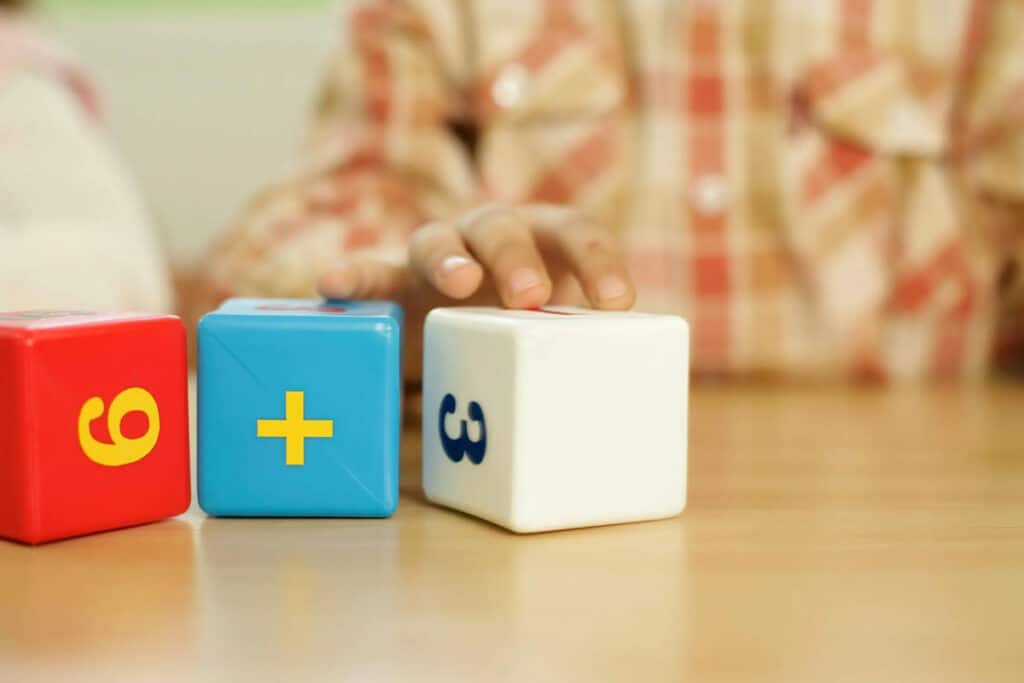
Why do students need to learn the basic math facts? Why do some struggle to learn them? And what are the best strategies and techniques to learn all four operations?
We posed the question: What is one of the hardest things to do in the world? to ChatGPT. The response: letting go of either someone or something you love or care deeply about. While we do not want to make light of losing someone or something special, anyone who has tried to teach the basic math facts to a child can relate to the hardest thing in the world part.
Some kids seem to learn, store and access the math facts easily. Others not so much! It is like they are trying to learn some combination language made up of Chinese, cryptocurrency terms, and Scottish brogue. There is a twinkle of familiarity in there, but most of it simply does not register.
However, to graduate from high school in most States, students must take four years of math, including passing both algebra 1 and geometry. And in order to successfully navigate these higher level math courses, students need a solid foundation with the four operations – addition, subtraction, multiplication, and division.
Why learn the facts
Some may say memorizing facts that can be easily found is an outdated skill. Simply punch 9 x 6 in a calculator and it immediately spits out 54. Unfortunately, math is the ultimate building block class, where one skill typically leads directly into another, which builds off of it and this then repeats. Learning the basic facts for all four operations is a foundational skill which allows more complex math to make sense.
Ed Week reports that cognitive scientists state it frees up working memory when solving higher level problems. A firm grasp of the facts also promotes efficiency and less frustration later in school when concepts get more challenging.
Additionally, it boosts students view of themselves as math students and provides confidence to tackle higher level math concepts.
Any math phobic parents out there? Knowing the facts decreases math anxiety, which often rears its jittery head when students struggle to learn the facts and are presented with more difficult math problems.
Convinced to tackle the facts with your child?
The goal is by the end of 5th grade to have all four operations locked in and automatic. Get the facts into long-term memory, where they can be stored and easily accessed.
Why some students struggle to learn the facts
There are many reasons a student may struggle to learn the math facts. They may have a learning difference like dyscalculia, which makes math more difficult. Another reason a student may wrestle to learn the facts is a processing issue. Slow processing can hinder their ability to see the patterns embedded among numbers. These students may benefit from an auditory approach to fact practice rather than traditional flashcards.
Yet another reason some students struggle to memorize the basic math facts is an attention issue such as ADHD. If it is not interesting or shiny – or a video game – a child may have zero interest in mastering the facts. These kids may need creative ways and salesmanship to encourage them to focus on learning the facts.
Further, some kids – and by proxy their parents – simply do not practice enough. It takes an intentional and disciplined approach. Adding five minutes each school night after homework to practice the facts could yield massive gains.
While it is absolutely true not all students learn the facts in the same way or in the same time frame, it is critical that each student commit to a practice schedule and chip away at learning them.
Strategies to learn each of the operations
We are not born with a math center in our brain waiting to be tapped into. Like so many subjects in school, math is an acquired skill that must be systematically taught. Typically, we start with addition, then subtraction, after that multiplication, and finally division. To that end, here are some suggested strategies and techniques to teach the four operations.
Addition
Follow a sequence: start with +0, then +1, +2, …
Use strategies like doubles and doubles plus one. An example of doubles is 5 + 5 = 10; an example of doubles plus 1 is if 5 + 5 = 10, then 5 + 6 = 10 +1 or 11.
Practice numbers that add to 10: 9+1, 8+2, 7+3, 6+4, 5+5
Use physical objects to concretely represent the fact
Use number lines to help “see” the jumps
Subtraction
Use fact families 4 + 3 = 7… so 7 – 4 = 3
Count backwards on a number line
Follow a sequence such as -1 fact family, then -2, etc.
Focus on facts that add to 10: 10 – 1 = 9, 10 – 2= 8, 10 – 3 = 7….
Count up when the two numbers are close to each other. For example, 9 – 7 count up 8, 9 for a difference of 2, rather than counting backwards 7 times.
Subtracting 9 can be intimidating, so imagine subtracting 10 then add 1. For example, 16 – 9, think 16 -10 = 6 + 1 = 7 so 16 – 9 = 7
Multiplication
Follow a sequence: x 0, x 1, x 10, x 5, x 2 these are over 50% of the facts!
Use songs such as this classic video from School House Rock
Practice skip counting: 3, 6, 9, 12, 15… Or 4, 8, 12, 16, 20…
Practice filling in blank multiplication charts
Use picture related flashcards, such as 3 spiders with 8 legs each to model 3 x 8 = 24. Woodin math has many more suggestions.
Timed tests – some kids thrive on competition and love the challenge of trying to beat a previous time for completing 30 facts. However, other children do not perform well under pressure due to processing issues or dysgraphia or a general dislike of competition. You know your child best!
Division
Use concrete objects to model the problem. 10 marbles divided into 2 groups equals 5 marbles in each group.
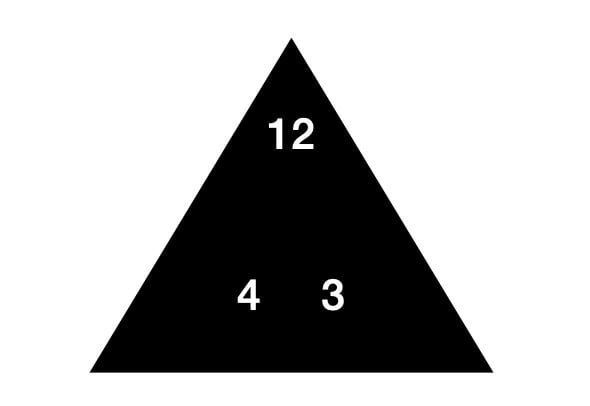
Focus on fact families: if 8 x 5 = 40 then 40 / 8 = 5. Incorporate triangular flashcards:
If you cover the 4, then the problem is 12/3. If you cover the 3, then the
problem is 12/4. If you cover the 12, then it becomes a multiplication problem of 4 x 3
The Math Learning Center has this great resource that models division using different strategies, including area models, arrays, and skip counting.
Engage the Brain Specialists share their favorite games and activities
Catherine Griffin, Math Specialist:
A game I like to play with addition is “compensation golf” where we use a 10 frame, roll 2 dice, add the numbers and see how close you are to 10. At that point you can choose to roll a single dice, roll both dice, or keep your score. If you get to 10, you don’t get any points, but if you are under or over, that is your score for the round. Similar to golf, the lowest score wins.
One of my favorite tools to use with learning multiplication facts (and can be used with division) is skip counting with beads on strings. Then we usually stand up and play catch while skip counting. One of my students I take outside and we play catch with a football while counting. If a student knows their multiplication facts well, we might start with a random number like 3, and then add 7 back and forth. (It’s a good exercise for me too! ???? ).
Jennifer Disch, Founder, Educational Director
Multiplication Battleship – played like the tradition game but with a math twist.
Broken Calculator – great to build an understanding of how numbers can be put together in different ways.
Strike it Out – combines critical thinking and fact fluency. Watch the video to learn more!
How Close to 100 – great game that uses graph paper (10 by 10 grid) and dice to practice multiplication facts.
Libby Couch, Math Specialist:
One of my all-time favorites is Shut the Box—it’s a great game for practicing number sense, addition, and strategic thinking.

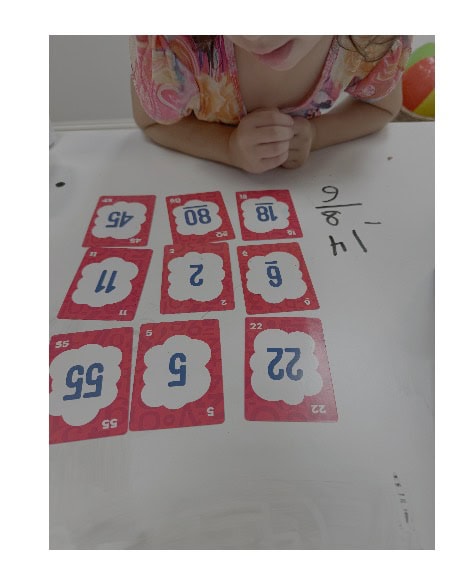
A game I really enjoy is Proof—it’s a fast-paced mental math game that challenges players to find equations using the numbers on the cards. It’s great for strengthening number fluency and flexibility.
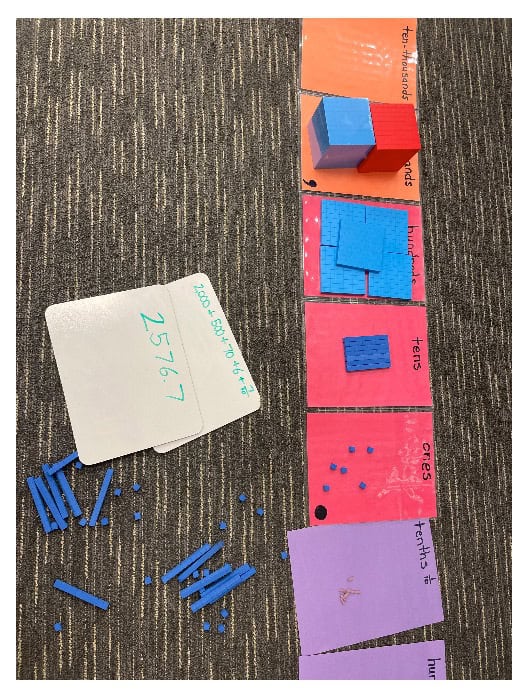
I’m also a big fan of incorporating movement into math, especially using giant number lines or place value charts for jumping games. These types of activities help reinforce number relationships, rounding, and even basic operations in an interactive way.
Final thoughts
Learning the basic math facts for all four operations is challenging but necessary for success in higher level math classes. Developing a plan, which is intentional and consistent, is the “secret” to success for your child to master the facts. There are an almost unlimited number of ways to practice the facts, but sticking to a schedule, adding in movement when appropriate, incorporating games and technology and progressing in a logical order ought to be part of the plan. And do not forget to reward progress!
If your child child has struggled to learn the basic facts and or has other challenges in math, please contact Jennifer Disch at Engage the Brain to discover how a math learning specialist may be able to guide your child to become a more confident and successful math student.