
Every parent has experienced that frightening moment when you bring your first child home from the hospital and realize there is no owner’s manual. There she sits, three days old, in the car seat on the kitchen table. Now what?
Some how you manage to make it through the first two years, and now you are confronted with the “Terrible Twos.” You want your kid to put on his sweatshirt because it is chilly outside. Your son doesn’t want to even wear a shirt. It is the beginning of the strive for independence in your child, and it NEVER LETS UP.
Fast-forward ten years and your child is in middle school. She brings home an “F” on a science test. You ask for an explanation and your daughter says, “It was a surprise test and everyone in the class failed. Mr. (fill in the name) is such a jerk. Nobody likes him.”
How you handle these two scenarios can help determine which type of parent you are: helicopter or free range. According to Wikipedia, Helicopter parents are overprotective and take an over excessive interest in their child’s life. Free Range parents encourage children to function independently in proper accordance of their age of development with a reasonable acceptance of realistic personal risks.
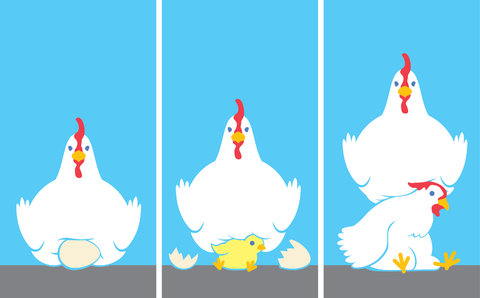
Courtesy New York Times learning blog
The idea of Free Range parenting came to attention when a mother in New York City allowed her then nine-year-old son to ride the subway unattended, then wrote about it in a book.
Like most things in life, striking a balance seems to be the best approach. At Engage the Brain we witness, on an almost daily basis, the results of the different approaches to parenting. Being the detached professionals that we are – we never have these issues with our children! – this is the advice we give to the parents in our practice:
Parental Advice:
Encourage your child to advocate for him or her self.
Allowing your child the opportunity to solve a problem first builds self-esteem and a sense that they can control the outcome of a situation.
Allow a child to fail
Always bailing your child out does not teach him responsibility. Many parents we talk to tell us that their child wants to be independent and not be “nagged” by mom and dad. You must allow your child to succeed OR fail on their own. Failure has a way of motivating a person to try harder the next time.
A planner is mandatory
Many of the children we work with struggle with Executive Functions issues. At the core of the issue is organization and time management. Parents report their child never turns in homework, forgets to bring home the right text book, didn’t know there was a test today, etc. REQUIRING your child to use some version of a planner is critical for sustained success. We wrote a blog, In Defense of a School Planner , which outlines all the reasons to use one.
Wrapping it up
In reality there are as many different types of parenting styles as there are parents. Whether you tend to hover like an action news helicopter covering a car chase or lay off like a free range animal enjoying your large expanse and mountain views, there is some common ground to meet on. Helping your child to gain independence is the goal. By encouraging your child to advocate for herself, requiring her to use a planner and when necessary allowing her to fail, you are providing her the tools she will need to live a happy and successful life.
David Karch (learning Specialist with Engage the Brain)